Valley of Flowers Trek 2026: September Guide & Key Insights
On this page
⚡ Quick Answer
The Valley of Flowers trek is a 6-day, 5-night easy-to-moderate Himalayan trek in Chamoli, Uttarakhand, combining the UNESCO World Heritage alpine meadows with Hemkund Sahib at 4,328 m. The 2026 park season opened 1 June and remains open until 31 October. Peak bloom is mid-July to mid-August; September is the clearer-sky photography window. Global Events Travels runs this from Haridwar at ₹10,999 per person + 5% GST. Call +91 96000 36667 or WhatsApp +91 63833 13359.
You Did Not Miss It — You Are Standing at the Better Door
Your feed already declared the season over. July and August Instagram grids were full. You told yourself next year. That is the default path, and it is how people skip the Valley of Flowers trek in the one month the mountains actually show their faces.
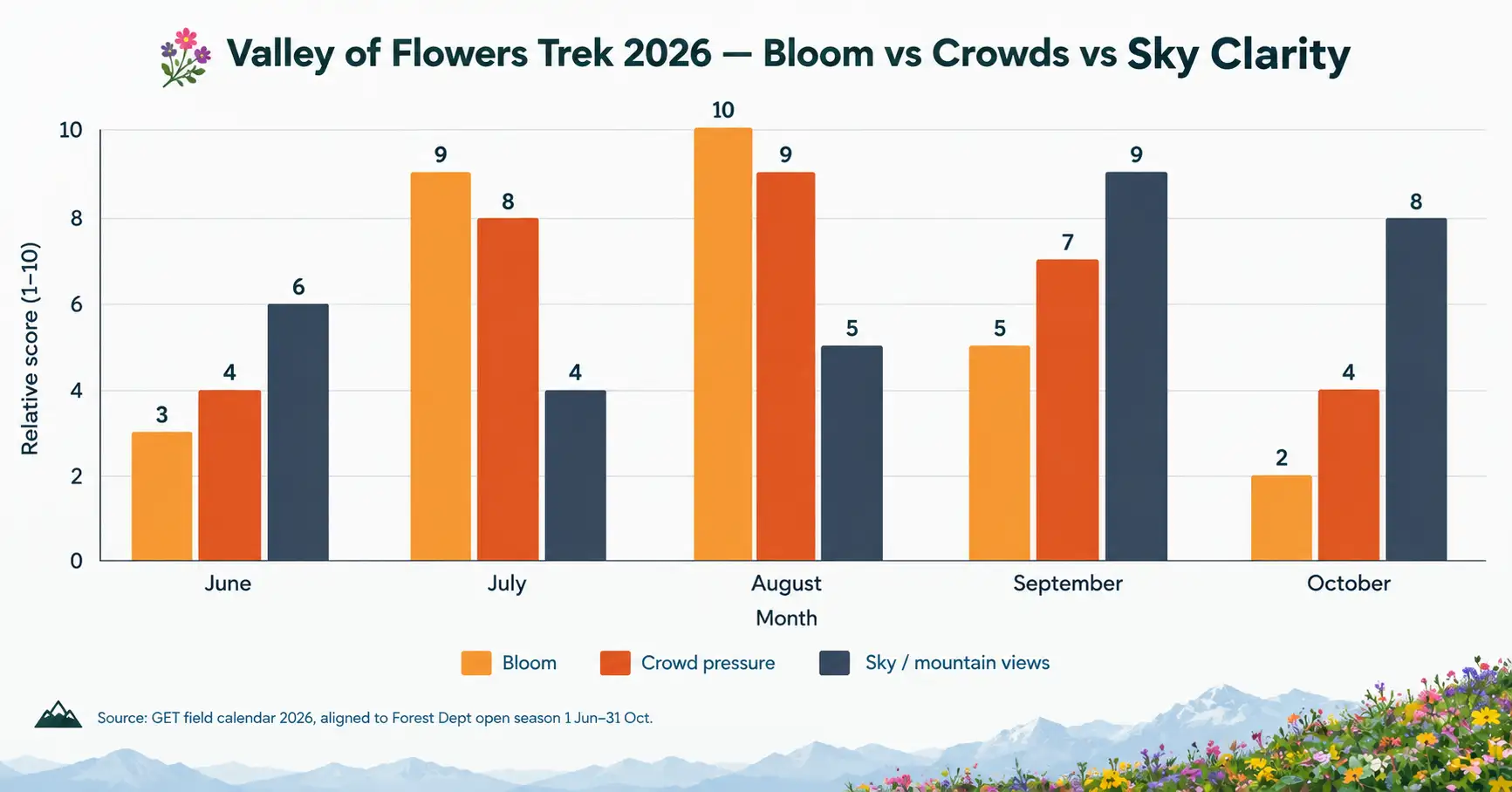
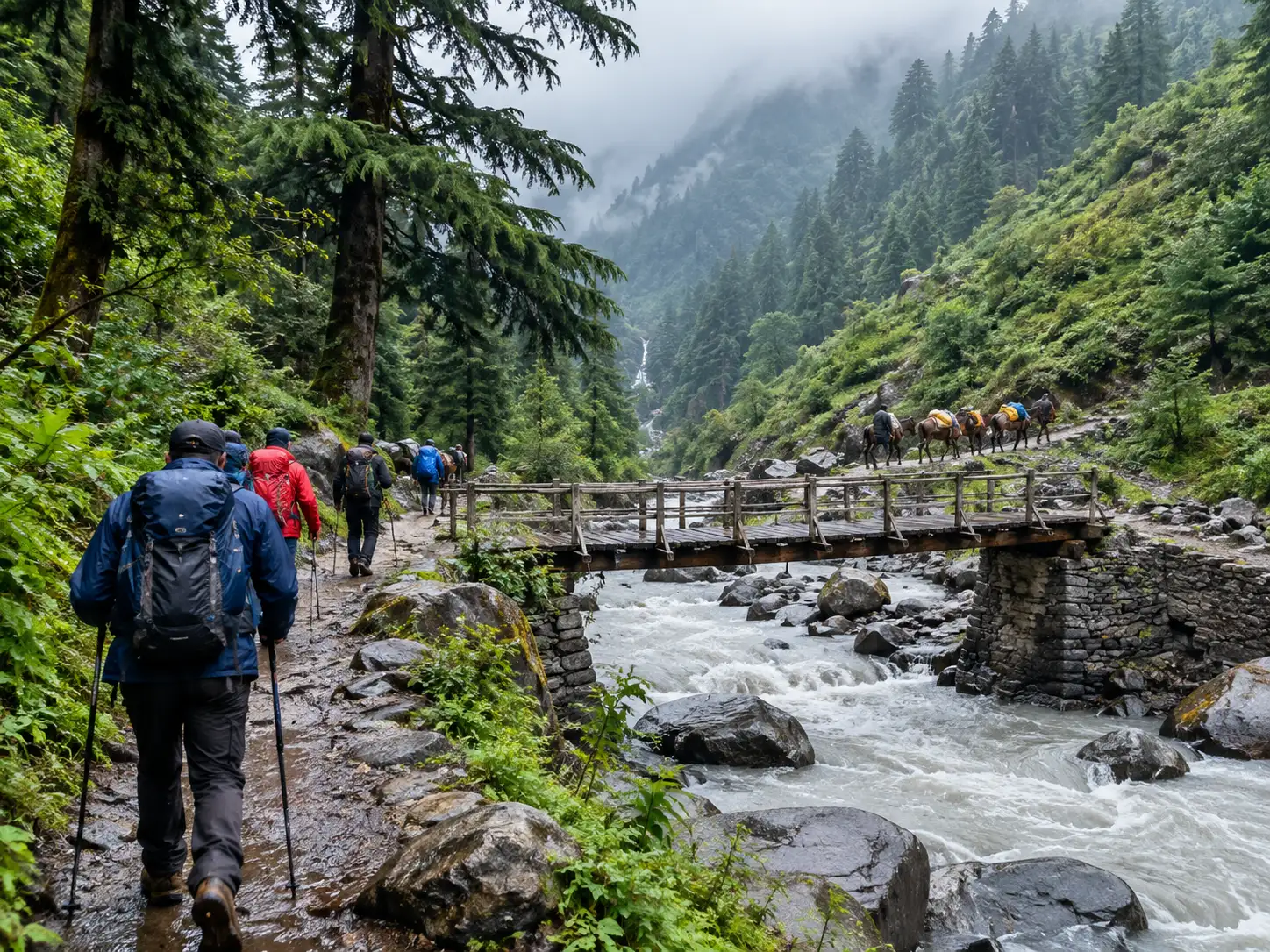
Peak bloom is not the same as peak trek. Mid-July to mid-August is colour. September is weather. After the monsoon starts to loosen, skies over Uttarakhand clean up, pilgrim traffic at Hemkund Sahib rises, and the valley floor still holds late alpine colour — not the carpet you saw in August reels, but a quieter meadow with real mountain backdrop. The Uttarakhand Forest Department opened the park on 1 June 2026 and has stated it remains accessible until 31 October. That is not a rumour from a trek aggregator. That is the official window.
This guide is the September 2026 playbook: what is still in bloom, what to pack while IMD still flags rain over Uttarakhand in the first week of September, how high Hemkund actually is, and how Global Events Travels runs the 6D/5N circuit from Haridwar. Read on for the day-by-day, the packing list, and the last-window booking math.
Valley of Flowers Trek 2026 — Facts That Matter This Month
| Item | Detail |
|---|---|
| Region | Chamoli district, Garhwal, Uttarakhand |
| UNESCO status | Nanda Devi and Valley of Flowers National Parks — World Heritage |
| Park season 2026 | 1 June – 31 October (Forest Department) |
| Best bloom | Mid-July to mid-August |
| Best skies | September (post-peak bloom, clearer views) |
| Valley altitude | ~3,500–3,658 m |
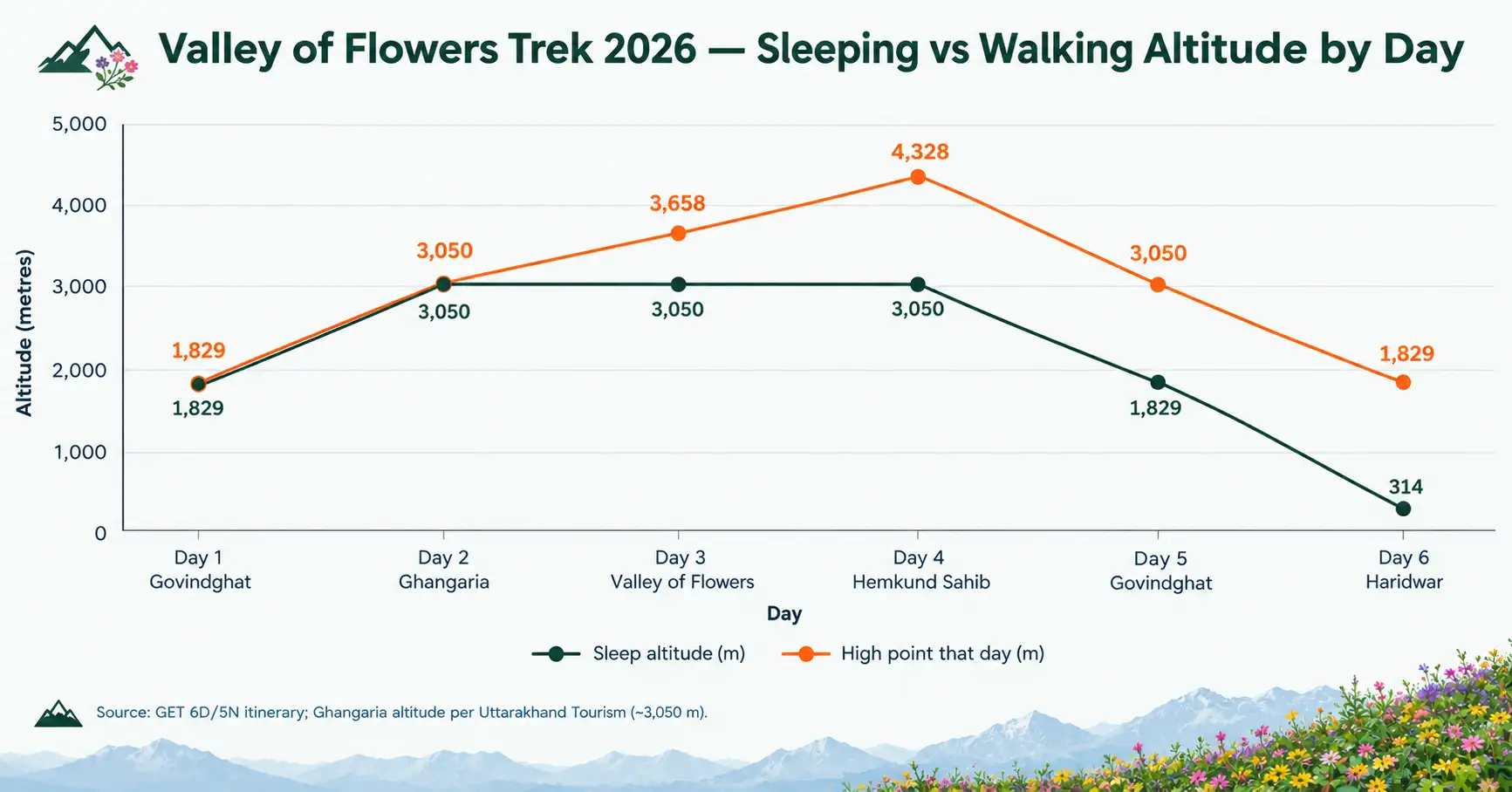
| Max altitude on GET itinerary | Hemkund Sahib 4,328 m / 14,199 ft |
| Duration | 6 days / 5 nights |
| Difficulty | Easy to moderate (min age 10+) |
| GET price 2026 | ₹10,999 per person + 5% GST |
| Pickup / drop | Haridwar, 7:00 AM start |
| Batch cap | Max 30 |
Forest entry for the national park is included in the Global Events Travels package. Overnight camping inside the park is not allowed — you sleep in Ghangaria and must be back the same day. Uttarakhand Tourism states visitors need to return to Ghangaria by evening; GET's Hemkund day is stricter: be off the high trail before 2:00 PM.
📞 Talk to a GET guide before you book a random September date. IMD still had fairly widespread rain listed for Uttarakhand through 8 September 2026. We flex batches around that, not against it. WhatsApp +91 63833 13359.
Why This Trek Is Trending in September 2026
Three things stacked at once.
1. The park is still legally open. Outlook Traveller reported the 2026 visitor season as 1 June to 31 October. News on AIR quoted Forest Range Officer Chetna Kandpal on the same close date, with more than 300 flower species already recorded at opening. You are not sneaking in after shutdown. You are inside the official calendar.
2. Himalayan travel demand is not a niche anymore. Union minister Indra Hang Subba told the Lok Sabha that tourist visits to the Indian Himalayan Region rose from 10.55 crore in 2014 to 40.78 crore in 2025 — a 286% jump — and pointed to the National Strategy for Adventure Tourism. Uttarakhand alone recorded 6.03 crore visitors in 2025, the first time the state crossed six crore since formation (ETV Bharat). That crowd is why July–August Ghangaria feels like a queue. September is how you keep the UNESCO meadow and drop the crush.
3. Safety rules got national. In March 2026 the Ministry of Tourism, with ATOAI, circulated Model Adventure Safety Guidelines to every state. Uttarakhand is separately tightening operator registration, medical checks, and local hiring for high-altitude treks (Hindustan Times). Booking a Manali-based operator that already runs certified guides is not a vibe choice. It is the 2026 compliance choice.
The Indian Mountaineering Foundation has estimated Uttarakhand's trekking economy at about ₹100 crore, with 3–5 lakh people a year on trail (ETV Bharat, Budget 2026). Valley of Flowers is one of the few of those routes that is also a World Heritage core zone. Treat it like a protected site, not a picnic.
What UNESCO Actually Protects (And Why You Walk Out by Dusk)
The UNESCO World Heritage listing covers Nanda Devi and Valley of Flowers National Parks together. Nanda Devi National Park was inscribed in 1988; the Valley of Flowers was added in 2005. UNESCO describes the valley as a high-altitude West Himalayan meadow of endemic alpine flowers, a transition between the Zanskar and Great Himalaya ranges, and habitat for snow leopard, Asiatic black bear, brown bear and blue sheep (bharal). Human pressure inside the core has been tightly limited since 1983. Livestock grazing inside the parks stopped that year. Mountaineering inside Nanda Devi National Park has been banned since 1983.
That is why the Valley of Flowers trek is a day visit from Ghangaria, not a camp-in-the-meadow product. Uttarakhand Tourism is explicit: overnight stay inside the valley is not allowed. You walk in, you photograph, you walk out. GET's itinerary is built around that rule — three nights in Ghangaria, two valley/Hemkund days, never a tent on the World Heritage floor.
GET's own flora count for the circuit, from the operating brochure: 498 flowering plant species and 520 plant species in total. Treat that as the operator field figure. The Forest Department's June 2026 opening note of "more than 300 species" is a start-of-season snapshot, not a contradiction.
Day-by-Day: Global Events Travels 6D/5N Circuit
Pickup is Haridwar at 7:00 AM. Drop is Haridwar, typically by 10:00 PM on Day 6.
Day 1 — Haridwar to Govindghat (~1,829 m)
Long Garhwal drive via Joshimath. You pass river confluences the region is named for. Evening hotel in Govindghat. Dinner included. This is your first night at altitude — drink water, skip alcohol, sleep.
Day 2 — Poolna to Ghangaria
Drive about 4 km to Poolna, then trek ~9 km uphill to Ghangaria, the last habitation on the trail. Lunch break on the path. Stay hotel/tent in Ghangaria. This is the day that sorts fitness: if the 9 km climb feels honest, Hemkund on Day 4 will feel earned rather than reckless.
Day 3 — UNESCO day: Valley of Flowers and back
Forest checkpost, then the alpine valley. Packed lunch. Photography. Return to Ghangaria the same day. This is the day most people came for. In September, walk slower and look up — the surrounding Himalayan walls are the story once the densest bloom has thinned.
Day 4 — Hemkund Sahib (4,328 m) and back before 2:00 PM
World's highest Sikh Gurudwara, glacial lake, Lokpal temple beside it. A cold dip is optional and not a test of character. Must start the descent in time to be off the high trail before 2:00 PM. Afternoon weather on this ridge is the risk, not the morning climb. GET cooks an early dinner this night.
Day 5 — Descend to Govindghat
Same 9 km down to Poolna, taxi 4 km to Govindghat. Optional evening at Auli if legs and light allow (not included). Hotel in Govindghat.
Day 6 — Govindghat to Haridwar
Breakfast, long drive, Haridwar by late evening.
Inclusions that matter: Haridwar transfers, meals on trek days, morning/evening tea, tents and sleeping bags, forest and national-park fees, first-aid kit, certified guide, crampons. GST 5% extra. Porter/mule is on request, not bundled. Travel insurance is strongly recommended and not included.
September Packing List (This Is Not a July List)
July packing is about staying dry in a flower tunnel. September packing is about a wet first week, a cold Hemkund morning, and a sun that returns hard once the cloud lifts.
Carry on the body
-
Waterproof shell (not a fashion raincoat)
-
One warm layer you can add at 4,000 m without stopping the group
-
Trekking shoes with grip — Ghangaria paths stay slick after rain
-
30–40 L daypack for the valley and Hemkund days
-
Head torch, even if you plan to be down by 2:00 PM
-
Sunscreen, sunglasses, cap — September UV on snow-free rock is underrated
GET rents if you travel light
| Item | Rent (₹) |
|---|---|
| Trekking poles | 250 |
| Head torch | 250 |
| Poncho | 250 |
| Jacket | 600 |
| Trekking shoes | 600 |
Crampons are already in the GET kit. Poncho plus a proper shell is not double-packing — it is September in Uttarakhand. Recheck the IMD bulletin the morning you leave Haridwar. Weather windows on this trek change; we reconfirm with the batch, we do not freeze a WhatsApp date against a red warning.
Safety: AMS, Fitness, and What 4,328 m Actually Means
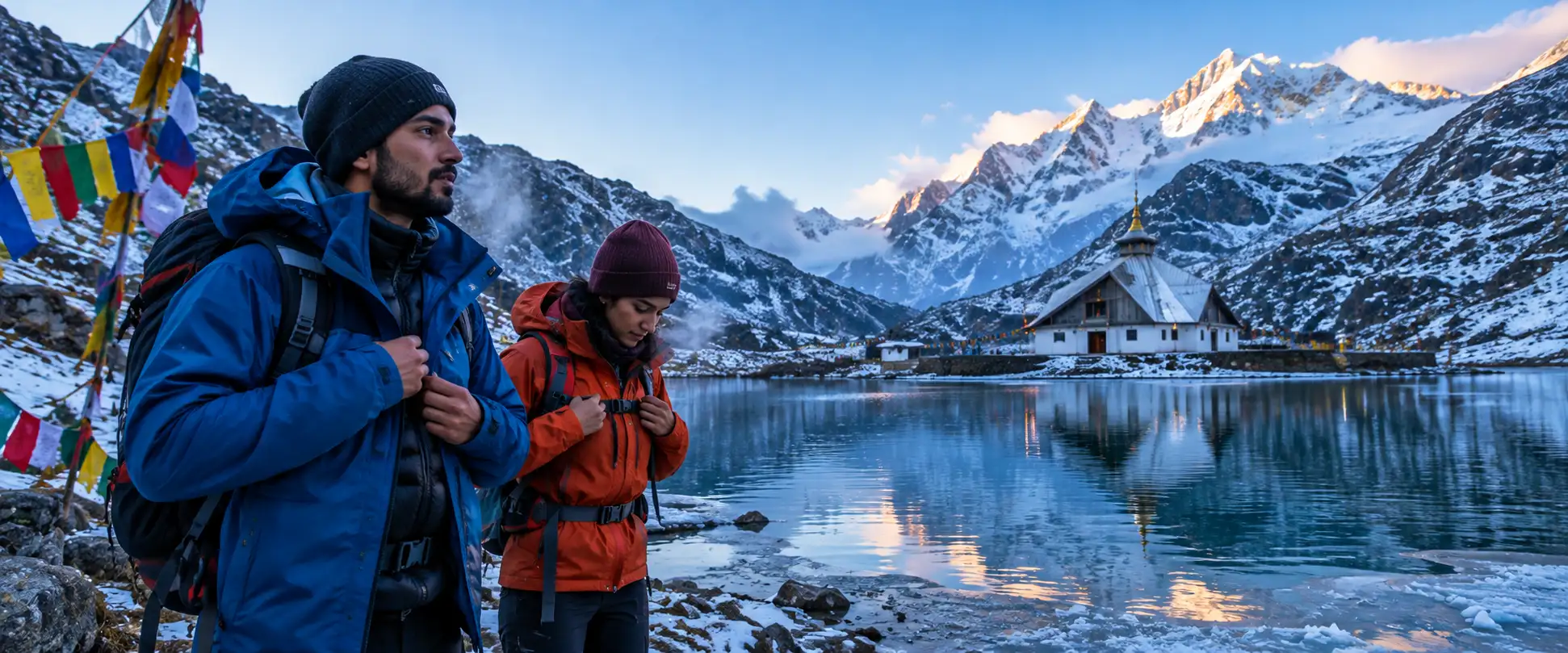
The valley floor sits above 3,500 m. Altitude sickness (AMS) is a real risk here, even if the walk looks "easy" on a brochure. Headache, nausea, unusual fatigue, or breathlessness that does not settle with rest is a medical event, not a toughness test. Tell the guide immediately. Descent is the treatment.
Hemkund Sahib is 4,328 m. GET recommends a medical fitness check before you book any trek that spends a day above 4,000 m. If you have heart, lung, or uncontrolled blood-pressure issues, get written clearance. Children 10+ are accepted on this itinerary because the valley day is moderate; the Hemkund day is the filter. If a family member should skip Hemkund, they can stay in Ghangaria — that is a valid plan, not a failure.
Acclimatization on this circuit is built into Day 2 and Day 3 before the 4,328 m push. Do not add a "we will also sprint Hemkund on the valley day" DIY. The park and the gurudwara are two days for a reason.
Ministry-level adventure safety guidance in 2026 is moving toward licensed operators, certified guides, and medical screening. GET has run Himalayan routes from Manali since 2016, with 15+ certified guides and 10,000+ trekkers served. That does not cancel AMS. It means someone on the trail has a protocol.
Cost, What Is Included, and How September Batches Work
| Cost line | Amount |
|---|---|
| GET 6D/5N Valley of Flowers trek | ₹10,999 per person |
| GST | 5% extra |
| Forest / national park entry | Included |
| Porter or mule | Extra, on request |
| Travel insurance | Extra (recommended) |
| Food on the Haridwar drive | Extra |
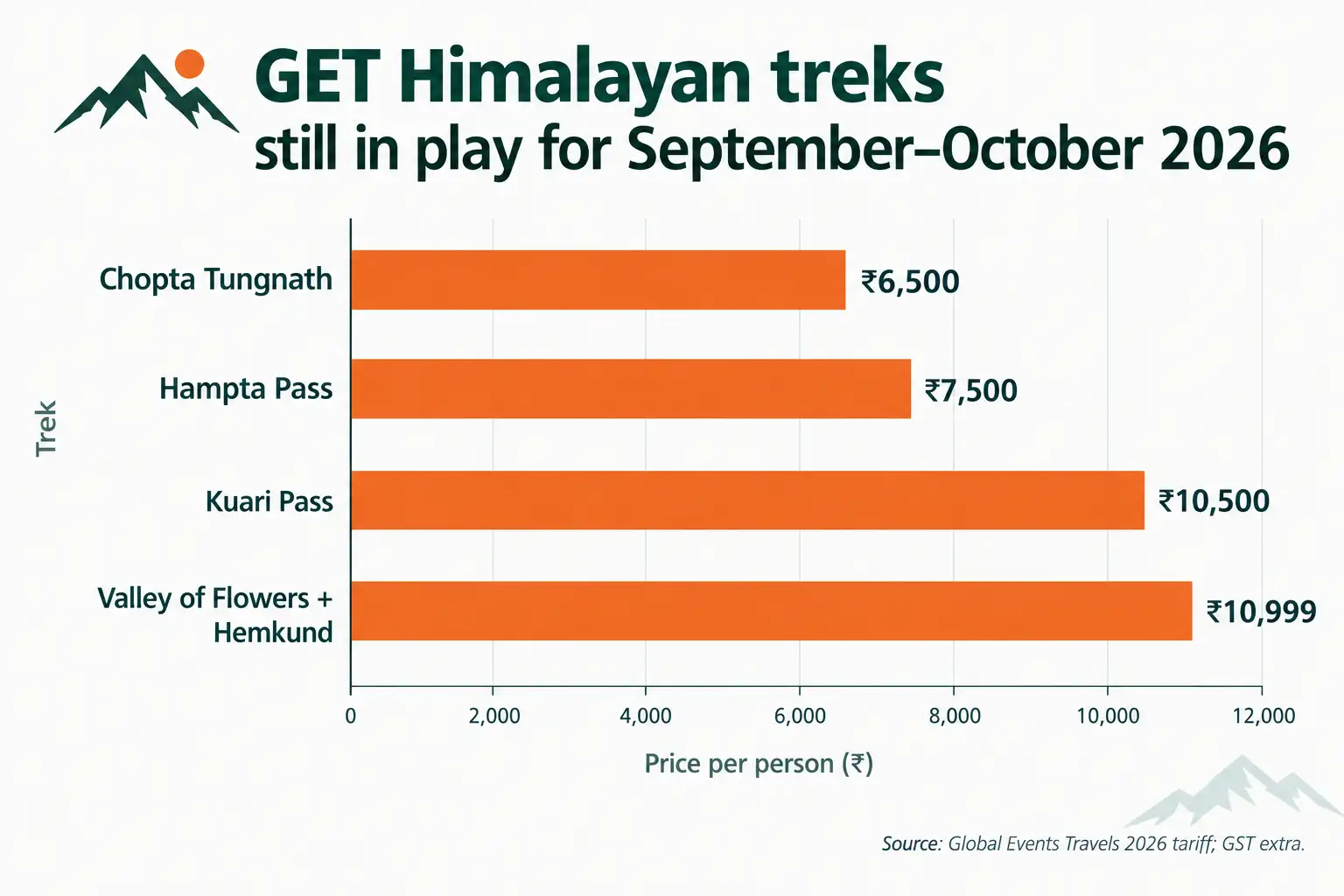
Compare that with GET's other open windows this month if VoF dates slip because of rain:
| Trek | Region | Days | Max altitude | GET price (₹) | Why it is a September backup |
|---|---|---|---|---|---|
| TrekValley of Flowers + Hemkund | RegionUttarakhand | Days6D/5N | Max altitude4,328 m | GET price (₹)10,999 | Why it is a September backupLast official park weeks |
| TrekHampta Pass | RegionHimachal Pradesh | Days5D/4N | Max altitude4,300 m | GET price (₹)7,500 | Why it is a September backupPost-monsoon crossover still in season |
| TrekChopta Tungnath | RegionUttarakhand | Days2N/3D | Max altitude4,001 m | GET price (₹)6,500 | Why it is a September backupAutumn summit views after rains ease |
| TrekKuari Pass | RegionUttarakhand | Days4N/5D | Max altitude4,237 m | GET price (₹)10,500 | Why it is a September backupOct window if you can wait 2–3 weeks |
Hampta Pass is the natural Plan B from the same operator if Chamoli weather locks the valley. Read the dedicated Hampta Pass trek 2026 guide before you switch.
Mid-article CTA: if you already know you want the UNESCO week, do not wait for October rumours. WhatsApp +91 63833 13359 with your city and travel dates. Call +91 96000 36667 if you want a voice briefing on AMS and packing.
Who This Trek Is For (And Who Should Pick Something Else)
Go if: you want a first Himalayan trek that is not a snow pass, you care about a protected landscape, you can walk 9 km with a daypack on two consecutive days, and you can take 4,328 m seriously.
Skip Hemkund, keep the valley if: 4,000 m+ is new and you want a conservative first time. The Valley of Flowers day still stands on its own.
Pick Hampta or Chopta instead if: you need a shorter Himachal start from Manali, or you specifically want a summit view rather than a meadow. Chopta Tungnath is the autumn-views specialist. Hampta is the green-to-desert crossover.
International trekkers (UK, US, Singapore, Middle East are GET's common origins) should carry passport copies for forest checks and buy insurance that covers trekking to 4,500 m.
❓ Frequently Asked Questions
Q1. Is the Valley of Flowers trek still open in September 2026 in Uttarakhand?
Yes. The Uttarakhand Forest Department opened Valley of Flowers National Park on 1 June 2026 and has stated it remains open to visitors until 31 October 2026. September is past peak bloom and better for clearer mountain views. Global Events Travels is still running the 6D/5N circuit from Haridwar. Confirm your exact batch on WhatsApp +91 63833 13359 because IMD rain windows can shift a departure by a day or two.
Q2. Can a first-time trekker do the Valley of Flowers trek without prior Himalayan experience?
Yes, if you can walk 9 km on consecutive days with a daypack and you treat 4,328 m as altitude, not a photo stop. GET rates it easy to moderate, minimum age 10+. The valley day is the gentler UNESCO walk. Hemkund Sahib is the hard day. Skip Hemkund and stay in Ghangaria if a family member should not go above 4,000 m. Get a medical fitness check before you pay.
Q3. Valley of Flowers trek ki fees 2026 mein kitni hai, Uttarakhand?
Global Events Travels ka 6 din / 5 raat package ₹10,999 per person + 5% GST hai, Haridwar pickup-drop ke saath. Isme guide, meals on trek, tents, forest aur national park entry shamil hain. Porter alag. Call +91 96000 36667 ya WhatsApp +91 63833 13359 — free itinerary 15 minute mein.
Q4. How long does the Valley of Flowers trek take and what does it cost with Hemkund Sahib?
Block six days and five nights door-to-door from Haridwar. Day 3 is the valley, Day 4 is Hemkund Sahib at 4,328 m. GET's 2026 tariff is ₹10,999 + 5% GST, forest fees included. Independent permit rates at Ghangaria vary by nationality and year — do not DIY the forest paperwork if you are on a GET batch; it is already in the package.
Q5. What salary of views — wait, what outcome should I expect after the Valley of Flowers trek?
Expect a protected alpine meadow, not a guaranteed full-bloom carpet in September, plus a 4,328 m gurudwara day if you are fit. Peak floral colour is mid-July to mid-August. September trades some flowers for sky. UNESCO lists snow leopard habitat in the wider parks; you should not plan the trip around a sighting. The outcome is a completed, permitted World Heritage walk with a real altitude day in the Indian Himalayas.
Q6. Is Global Events Travels a good operator for the Valley of Flowers trek from Haridwar?
GET has operated Himalayan treks from Manali, Himachal Pradesh since 2016, with 15+ certified guides and 10,000+ trekkers served, 4.8★ average. The VoF itinerary is a fixed 6D/5N Haridwar loop with park fees included and a hard 2:00 PM Hemkund turnaround. Talk to a person on +91 63833 13359 before you pay — not a chatbot.
Q7. What if September rain in Uttarakhand cancels the valley day?
Then you wait for a clear morning in Ghangaria or you switch the remaining window to another GET Himalayan trek still in season (Hampta Pass from Manali, or Chopta Tungnath for summit views). Weather on this route is not a promise. Reconfirm with the operator 48 hours out. That is the adult version of "best time to visit."
🚀 Book the Valley of Flowers Trek Before the Gate Closes
🔥 Monsoon Valley of Flowers windows are 6 weeks only — Jul to early Sep.
Global Events Travels 📍 Manali, Himachal Pradesh, India 📞 +91 96000 36667 (Call) 💬 +91 63833 13359 (WhatsApp — preferred) 🕘 Open 9 AM – 9 PM IST, every day 🎓 6D/5N Valley of Flowers + Hemkund batches · Haridwar pickup 7:00 AM · Max 30 per batch · Pay 25% to hold a seat if you need float
📞 Call Now: +91 96000 36667💬 WhatsApp Us — September 2026 slots
Utkarsh Saxena
Operation Manager and Writer