Kedarkantha Winter Trek 2026: Complete Guide After Snowfall
On this page
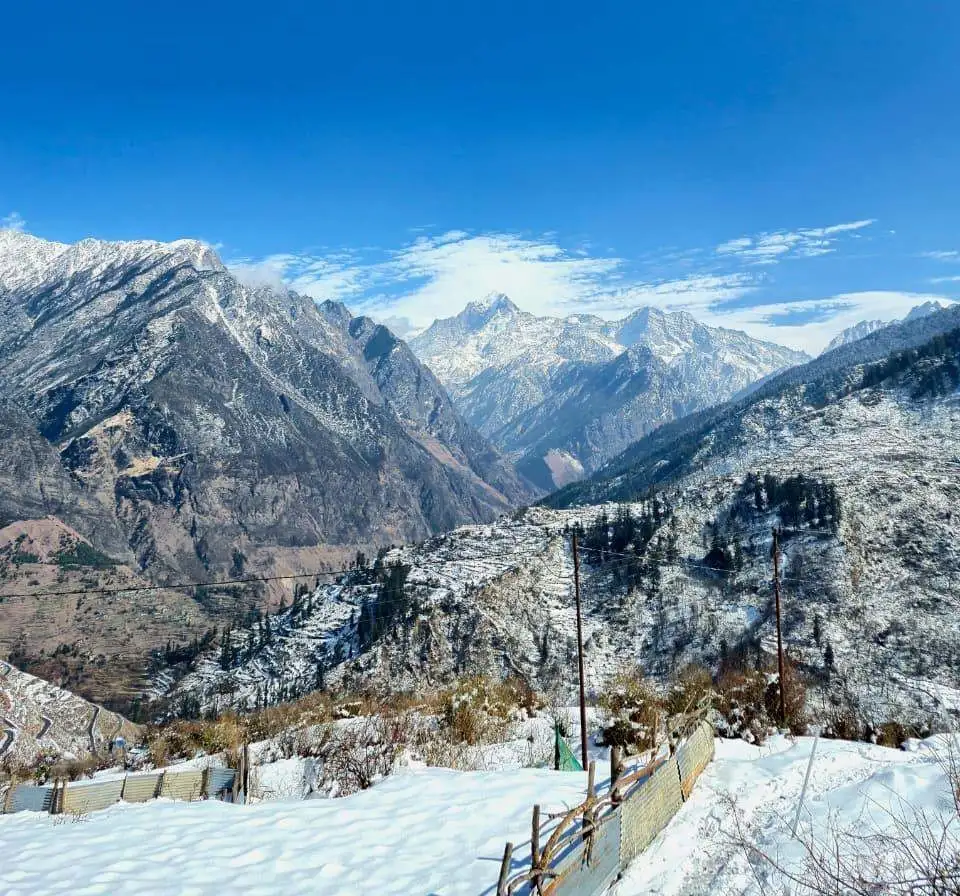
Snow Update: Kedarkantha received its first snowfall of the 2026 winter season around November 15, 2026, blanketing the upper campsites and summit area in a fresh layer of white. If you're planning a late November or December trek to Kedarkantha — India's most beloved winter trek — this guide tells you everything you need to know.
Why Kedarkantha in Winter Is Unlike Any Other Trek in India
There is a reason Kedarkantha is consistently ranked among India's top winter treks. The route from Sankri through pine and oak forests, past the frozen high-altitude lake of Juda Ka Talab, and up to the 12,500-foot summit offers a combination that is rare: achievable by beginners, genuinely spectacular in snow, and rewarding from the very first day.
November's first snowfall changes everything. The golden-brown autumn forest transforms overnight into a monochrome world of white. The frozen lake at Juda Ka Talab develops its signature icy surface. And the summit — on a clear winter morning — delivers a 360-degree panorama of the Garhwal Himalayas that seasoned trekkers describe as one of the finest views in the entire range.
Current Snow Conditions (as of November 20, 2026):
Trail SectionConditionSankri to Juda Ka TalabLight snow on upper sections; trail mostly clear belowJuda Ka TalabPartially frozen; surrounding meadow snow-coveredJuda Ka Talab to Base CampModerate snow; icy patches in shaded zonesBase Camp to SummitSignificant snow; pre-dawn conditions well below zero
The Complete 5-Day Kedarkantha Winter Itinerary
Day 1: Dehradun to Sankri (Drive — 8–10 Hours)
Your journey begins in Dehradun. The road to Sankri (~190–200 km) winds through Uttarkashi district, following the Tons River valley through Purola and Mori before climbing to Sankri at 6,400 feet.
-
Depart Dehradun early morning (5:00–6:00 AM)
-
Sankri has local shops for last-minute gear rentals (microspikes, poles, gaiters)
-
Carry sufficient cash — ATMs beyond Purola are unreliable
-
Register at the Sankri forest checkpost with valid government ID
Day 2: Sankri to Juda Ka Talab (4–5 hrs, +2,700 ft)
The path climbs through one of the most beautiful oak and rhododendron forests in the Garhwal Himalayas. In late November, trees may carry a dusting of snow on their branches.
Route: Sankri (6,400 ft) → Juda Ka Talab (9,100 ft) | Distance: ~4–5 km
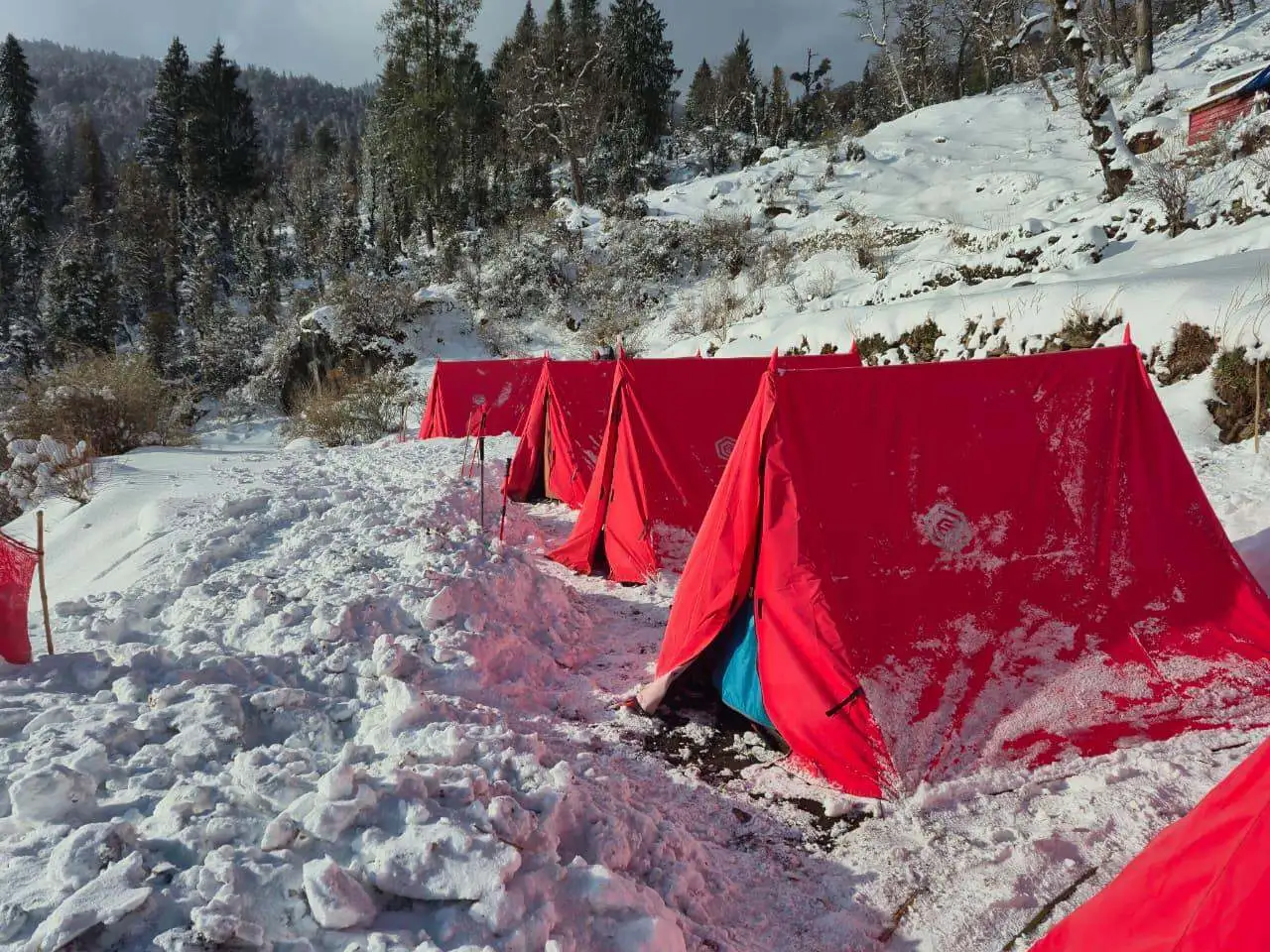
Juda Ka Talab — a small high-altitude lake set in a meadow clearing — has begun to freeze after the November snowfall. Camp here overnight amid pine trees with the meadow blanketed in white.
Temperatures: Daytime 2°C–8°C | Nighttime -4°C to -8°C
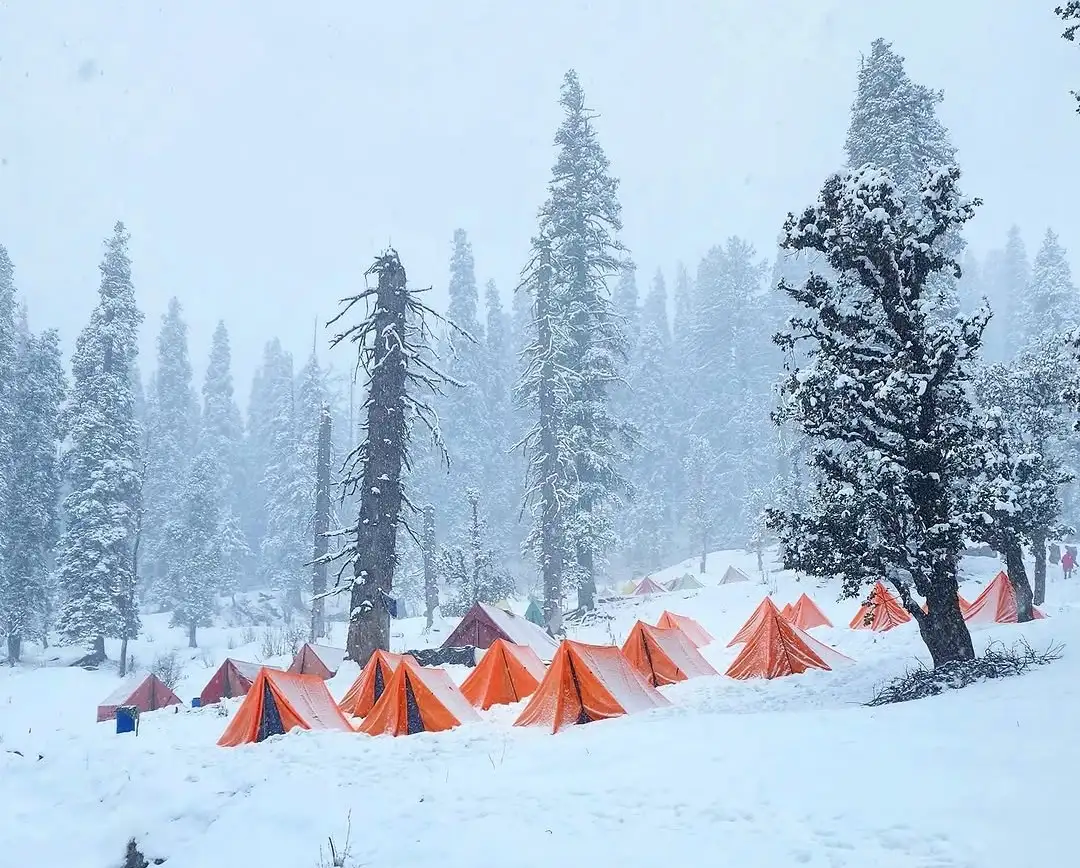
Day 3: Juda Ka Talab to Kedarkantha Base Camp (3–4 hrs, +1,600 ft)
The trail climbs steeply out of the meadow into the upper forest. By this point, snowpack is consistent and microspikes should be on. Views open dramatically — Swargarohini, Bandarpunch, and Black Peak become visible to the northwest.
Rest well this afternoon. Sleep by 8:00 PM — your alarm is set for 2:00 AM.
Temperatures: Daytime 0°C–5°C | Nighttime -8°C to -12°C
CAUTION
Do not underestimate the nighttime cold at base camp. Temperatures before the summit push can be -10°C or lower with wind chill. Wear your complete layering system inside your sleeping bag.
Day 4: Summit Push, Descent to Hargaon (The Big Day)
Wake up: 2:00–3:00 AM | Summit time: 3–4 hours | Descent to Hargaon: 4–5 hours
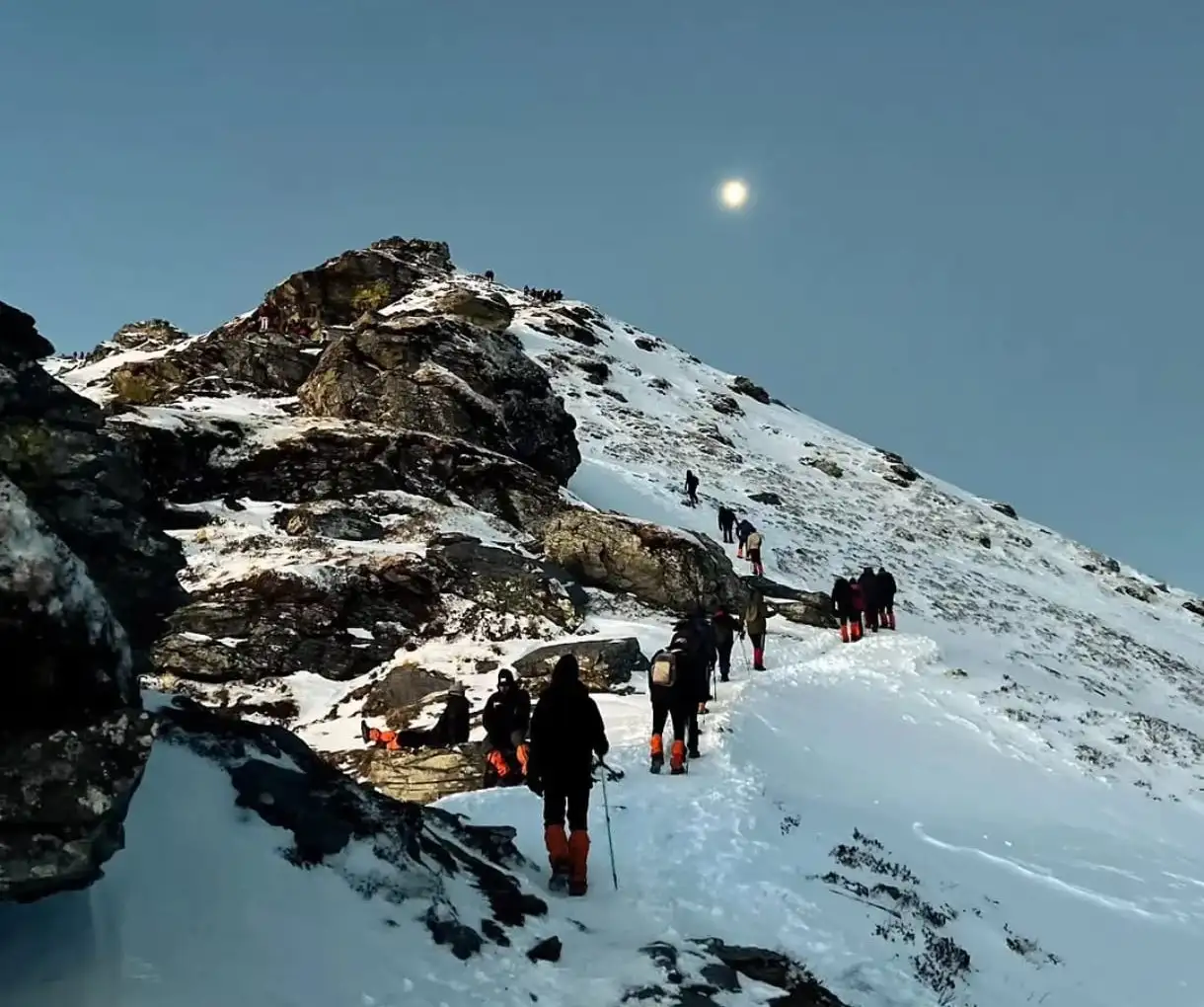
You step out of your tent into complete darkness and biting cold — typically -10°C to -15°C. Headlamps on, stars blazing above, the trail climbs steadily through snow.
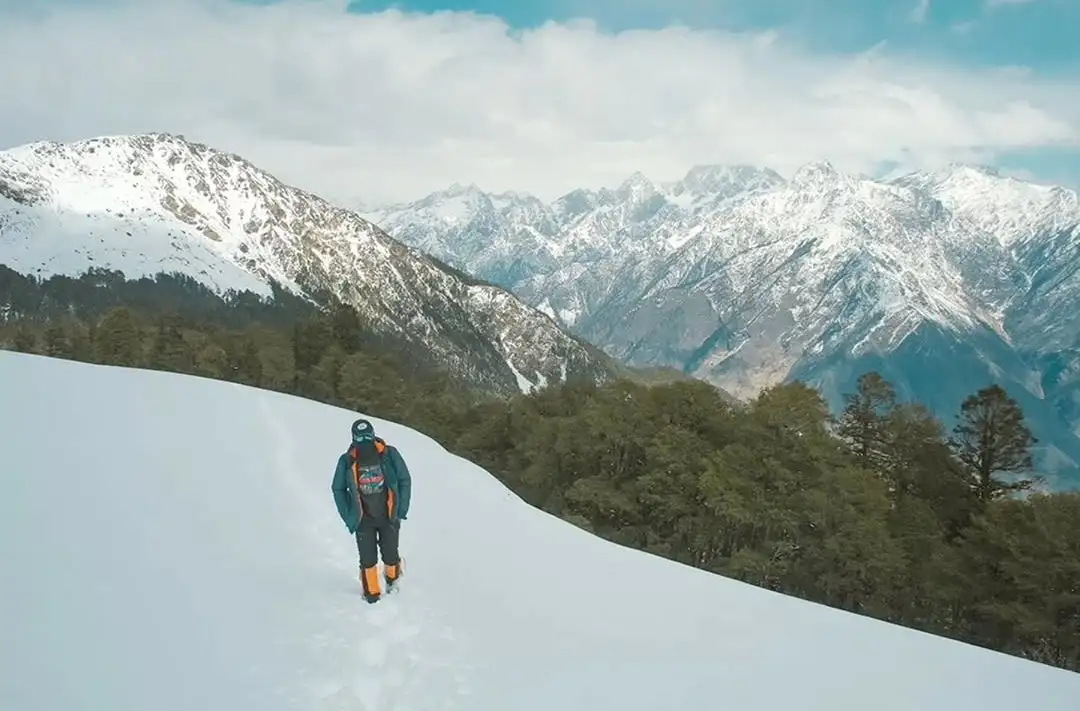
As you gain the upper ridge, the first light of dawn appears on the eastern horizon. The final climb to the Kedarkantha summit is steep and exposed with significant snow depth in winter.
Then the sun rises.
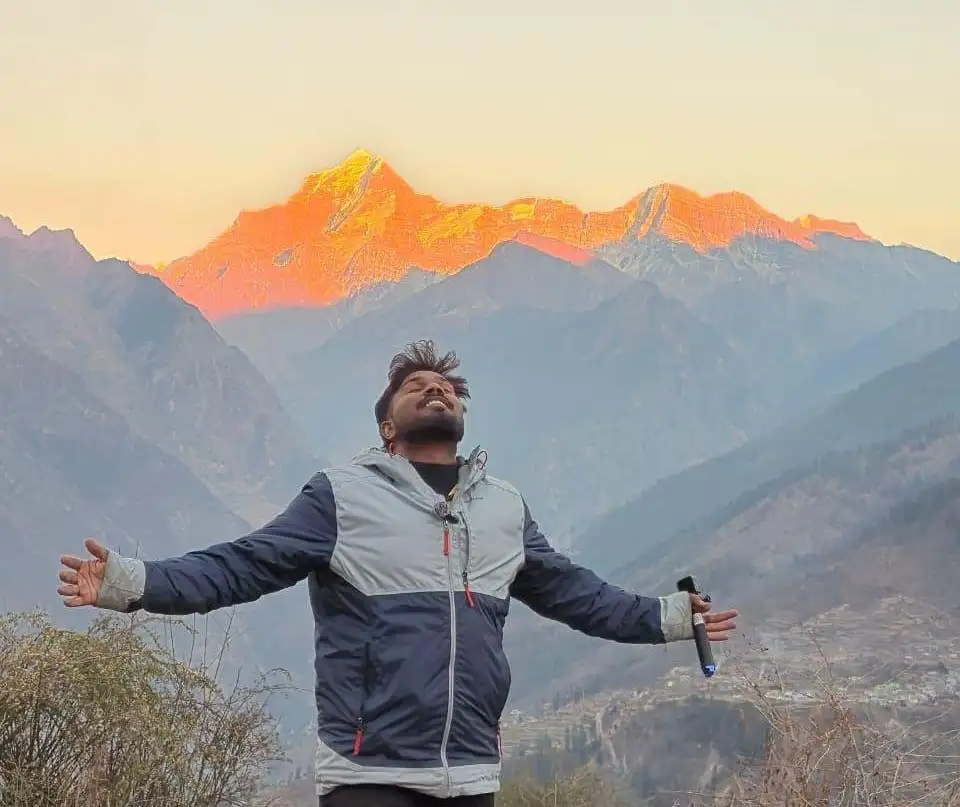
The 360-degree panorama from the summit in winter includes: Swargarohini (6,252 m), Bandarpunch (6,316 m), Black Peak/Kalanag (6,387 m), Kedarnath Peak, and Chaukhamba on the horizon. Spend time here — this is why you woke up at 2:00 AM.
Descend via the summit ridge to base camp, then continue down to Hargaon camp for lunch and rest.
Day 5: Hargaon to Sankri, Drive to Dehradun
A forest descent back to Sankri, then the 8–10 hour return drive to Dehradun.
Winter Gear Checklist
CategoryItemsFootwearWaterproof high-ankle boots, microspikes, gaiters, 3–4 pairs woollen socksClothingThermal base layer, fleece/down mid layer, waterproof shell jacket + pantsAccessoriesBalaclava, UV sunglasses, waterproof gloves + liner gloves, woollen beanieEquipmentHeadlamp + spare batteries, two trekking poles, insulated water bottle, sleeping bag (-10°C rated)SuppliesHigh-energy snacks, personal medical kit, chemical hand warmers
TIP
Microspikes, trekking poles, gaiters, and sleeping bags can be rented in Sankri. If trekking with an operator, confirm inclusions in advance.
5 Key Safety Rules for Winter
-
Physical preparation is not optional — Build cardio endurance (jogging, cycling, stair climbs) for 4–6 weeks before the trek.
-
Know AMS signs — Persistent headache, nausea, dizziness. Report immediately to your trek leader. Never push for the summit with AMS.
-
Full gear before the summit push — Every layer, both poles, microspikes on, headlamp tested, water bottle inside jacket. No exceptions at 2:00 AM.
-
Never leave the group — In snowfall or low visibility the trail disappears entirely. Your trek leader's decision to turn back is always correct.
-
Cash in Dehradun — ATMs beyond Purola are few and unreliable. Withdraw sufficient cash before you leave.
Budget Breakdown (Per Person)
ExpenseCost (INR)Delhi to Dehradun₹400 – ₹800Dehradun to Sankri (shared cab)₹700 – ₹1,000Organised trek package (5 days)₹7,000 – ₹14,000Personal gear purchase/rental₹1,000 – ₹3,000Miscellaneous₹500 – ₹1,500Total₹10,000 – ₹20,000
Frequently Asked Questions
Q1. Is Kedarkantha trek open after the November 2026 snowfall? Yes. The trail is open from Sankri. Mid-November snow has covered upper sections (Juda Ka Talab and above) but the route is well-marked and accessible for prepared trekkers. Confirm status with your trek operator before departing Dehradun.
Q2. Is Kedarkantha safe for first-time winter trekkers? Yes — it is specifically designed as India's most accessible winter summit. However, "beginner-friendly" in winter still requires physical preparation, microspikes, appropriate layered clothing, and ideally a registered operator or guide.
Q3. What sleeping bag rating is needed for Kedarkantha in winter? Minimum -10°C rating for Juda Ka Talab and base camp nights. For December and January, a -15°C bag is advisable. Base camp temperatures before the summit push can drop to -12°C or lower.
Q4. How do I get to Sankri from Delhi? Delhi → Dehradun by train or bus (5–6 hours) → Sankri by shared cab from Dehradun ISBT (8–10 hours). Depart Dehradun by 5:00–6:00 AM to reach Sankri before dark.
Q5. What peaks can I see from the Kedarkantha summit? Swargarohini (6,252 m), Bandarpunch (6,316 m), Black Peak/Kalanag (6,387 m), Kedarnath Peak, and the Chaukhamba group — all visible in a 360-degree panorama on a clear winter morning.
Global Events and Travels
Admin