6 Reasons Kauri Pass Is India's Best Winter Trek 2026
On this page
Snow has arrived. Mid-November 2026 brought the first snowfall of the winter season to the Kauri Pass trail in Uttarakhand's Chamoli district. While most trekkers are rushing to Kedarkantha, the Kuari Pass route is quietly delivering one of the finest high-altitude winter experiences in the entire Garhwal range. Here is why you're overlooking it — and why that's a mistake.
he Quiet Trek That Outperforms Its Reputation
Mention Kedarkantha to a trekking enthusiast and they will respond immediately. Mention Kauri Pass and you will sometimes get a pause — a moment of recognition followed by "oh yes, the Nanda Devi one."
That gap in recognition is Kauri Pass's greatest advantage.
While Kedarkantha receives enormous traffic through the winter season — multiple groups on the trail simultaneously, campsites that feel like a small village in peak season — Kauri Pass maintains a quieter, more solitary character. The trail is excellent. The views are extraordinary. The experience is more intimate.
And after the November 2026 first snowfall, the trail is now in its finest winter form.
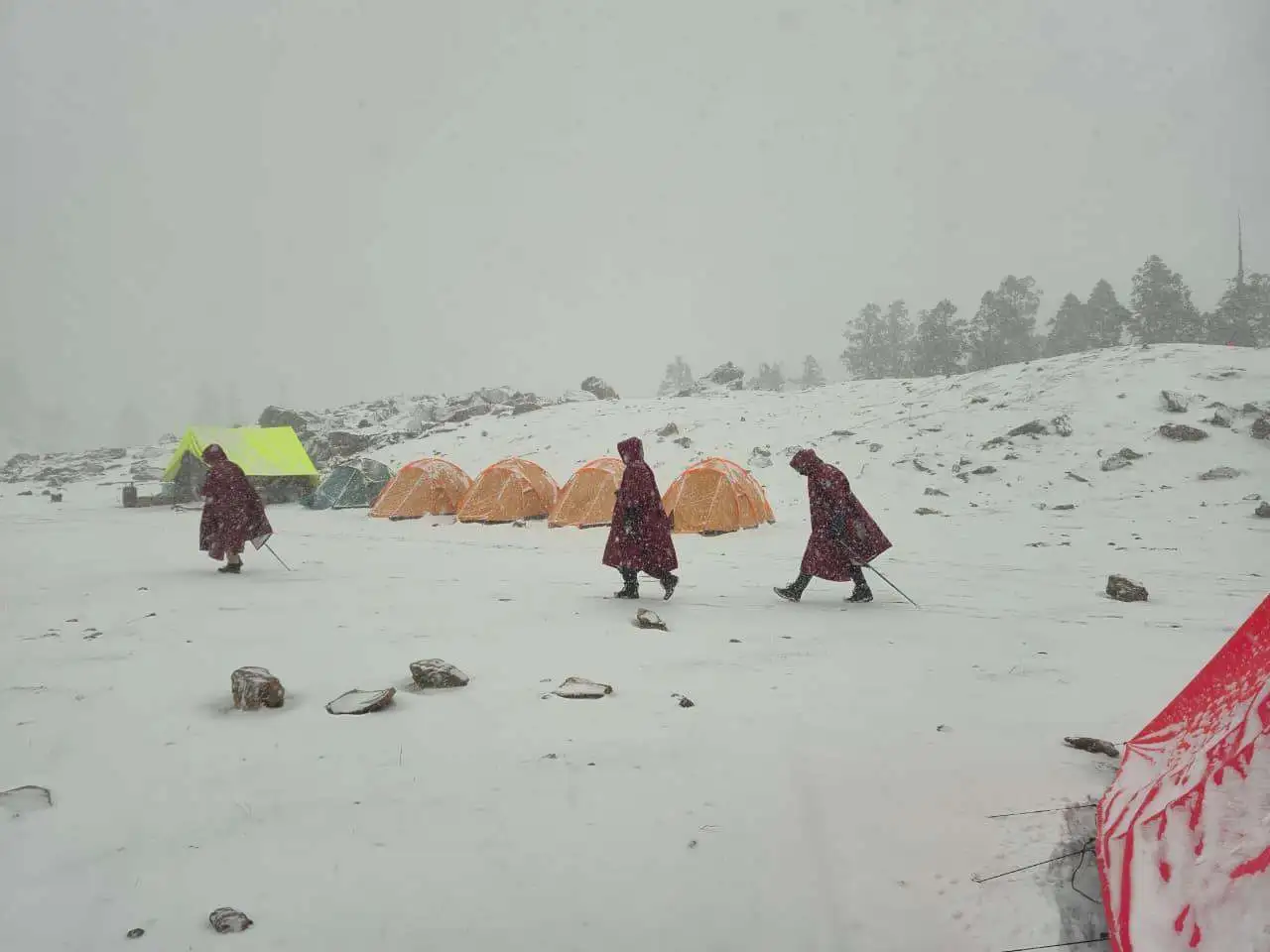
Reason 1: The Nanda Devi Panorama Is Unlike Any Other View in Himalayan Trekking
Nanda Devi. 7,816 metres. The second-highest peak entirely within India and one of the most beautiful mountains in the world by any objective standard.
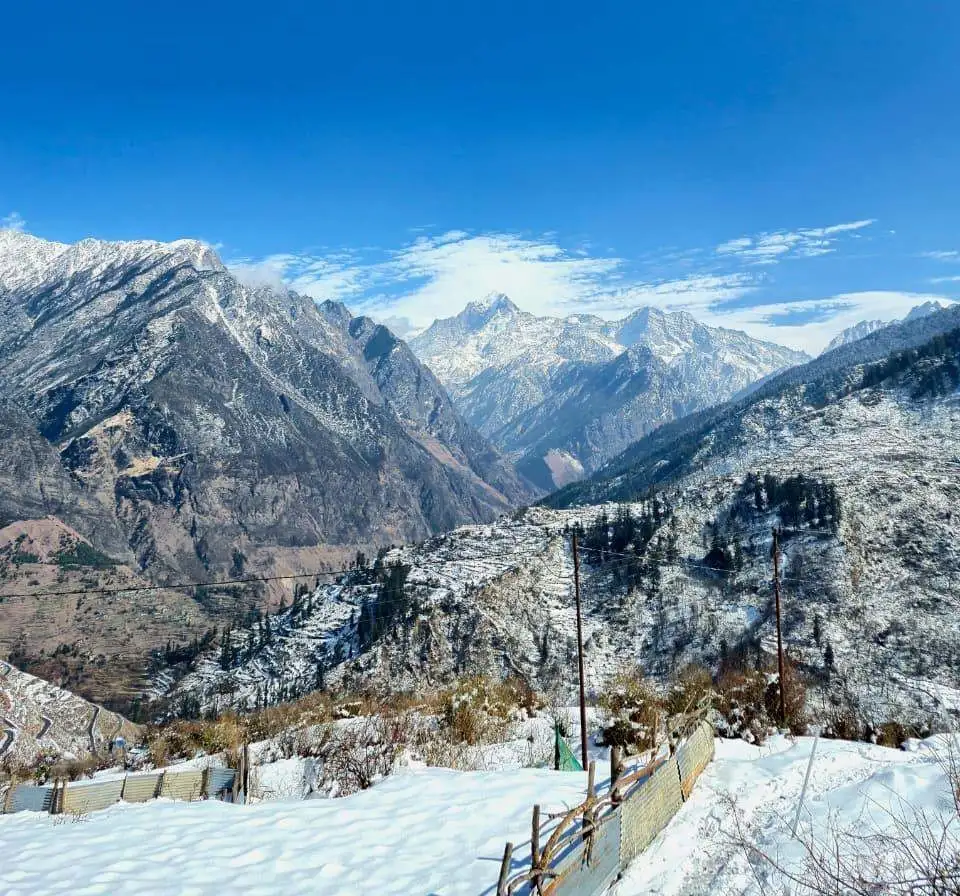
From the Kuari Pass ridge at 3,815 metres, Nanda Devi is not a distant smudge on the horizon. It is a close, dimensional, overpowering presence. Its distinctive summit architecture — the massive southwest face, the ridge connecting the main peak to the east summit — is visible in full detail on a clear winter day.
Surrounding it in what trekkers describe as "the greatest mountain panorama in India accessible without technical climbing":
Dronagiri (7,066 m) — directly in front to the southeast
Kamet (7,756 m) — the second highest peak in Uttarakhand
Chaukhamba (7,138 m) — the four-peaked massif above Badrinath
Hathi Parbat and Ghori Parbat — framing the view to the west
The November 2026 snowfall has recoated every face and ridge of these peaks in fresh white. The winter air clarity means sharpness in distant peaks that photographers wait months to capture.
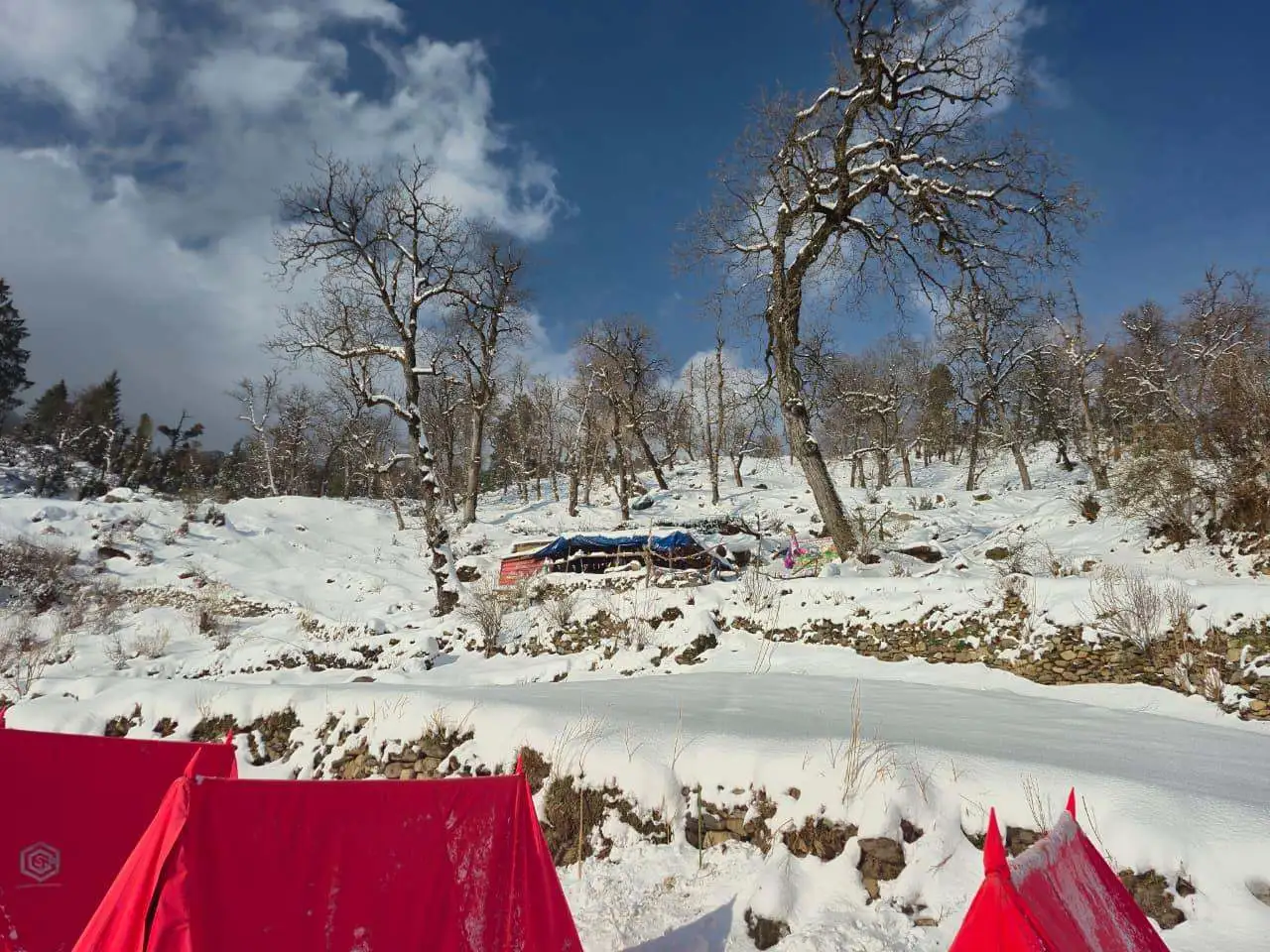
Reason 2: Gorson Bugyal in Snow — A Himalayan Meadow Under Winter
The word "bugyal" in Garhwali means high-altitude meadow — the vast, open grasslands that characterise the Garhwal range before you reach the glaciated terrain above.
Gorson Bugyal, situated directly above Auli at around 3,000–3,500 metres, is considered one of the finest high-altitude meadows in the Garhwal Himalayas. In winter after the November snowfall, it becomes something categorically different.
The meadow fills with snow. The vast, flat expanse becomes a featureless white plain under a blue winter sky. Footprints in the pristine snow are the only marks on a surface that otherwise looks untouched since the last snowfall. The surrounding forests are dark and bare in contrast.
Walking across Gorson Bugyal in winter is one of those rare trekking experiences that is completely, unusually quiet. No wind in the trees. No water sounds. Just footsteps in snow and the distant white wall of the high Himalayan peaks to the north.
Reason 3: The Forest Trail — A Winter Walk Through Ancient Oak and Rhododendron
Before you reach the snowfields, before the exposed ridge, before the meadow panoramas — there is the forest.
The Kauri Pass trail passes through a genuinely old-growth forest of oak, rhododendron, and mixed conifers. These are substantial trees — not the young plantation forests of lower Uttarakhand, but old, gnarled, canopy-forming oaks with trunks that require multiple people to embrace.
In late November after the first snowfall, sections of this forest have snow on the branches, in the hollows of tree roots, and on the forest floor in patches that don't receive direct sunlight. The light through the canopy in winter morning hours is directional and cold — shafts of pale gold through deep shadow.
The smell of a Himalayan oak and rhododendron forest in winter is specific and irreproducible: cold earth, decomposing leaf matter, the particular sharpness of old bark at altitude. After fifteen minutes in this forest, the city disappears entirely from your body.
Reason 4: Auli as Your Trek Base — A Bonus You Don't Get Anywhere Else
The Kauri Pass trek typically ends — or begins — at Auli. And Auli in winter after the November snowfall is in a unique position: it is both a trekking base and India's premier ski resort.
The Auli gondola — one of Asia's longest cable cars at approximately 4 km — links the valley at Joshimath to the ski slopes above at 2,519 m. The view from the gondola in winter, with the Nanda Devi group visible on a clear day, is extraordinary on its own.
If your trek ends or begins at Auli and you have a day either side, you have the option to experience ski slopes, snowboarding facilities, and the resort infrastructure of one of India's highest ski stations. This is completely unique to the Kauri Pass route.
Reason 5: The Solitude That Kauri Pass Still Offers
Kedarkantha is magnificent. It is also, in peak December and January season, genuinely crowded — multiple operators running simultaneous groups, campsites at Juda Ka Talab with dozens of tents, the summit path busy with headlamp lines at 2:00 AM.
Kauri Pass does not have this problem. Not yet.
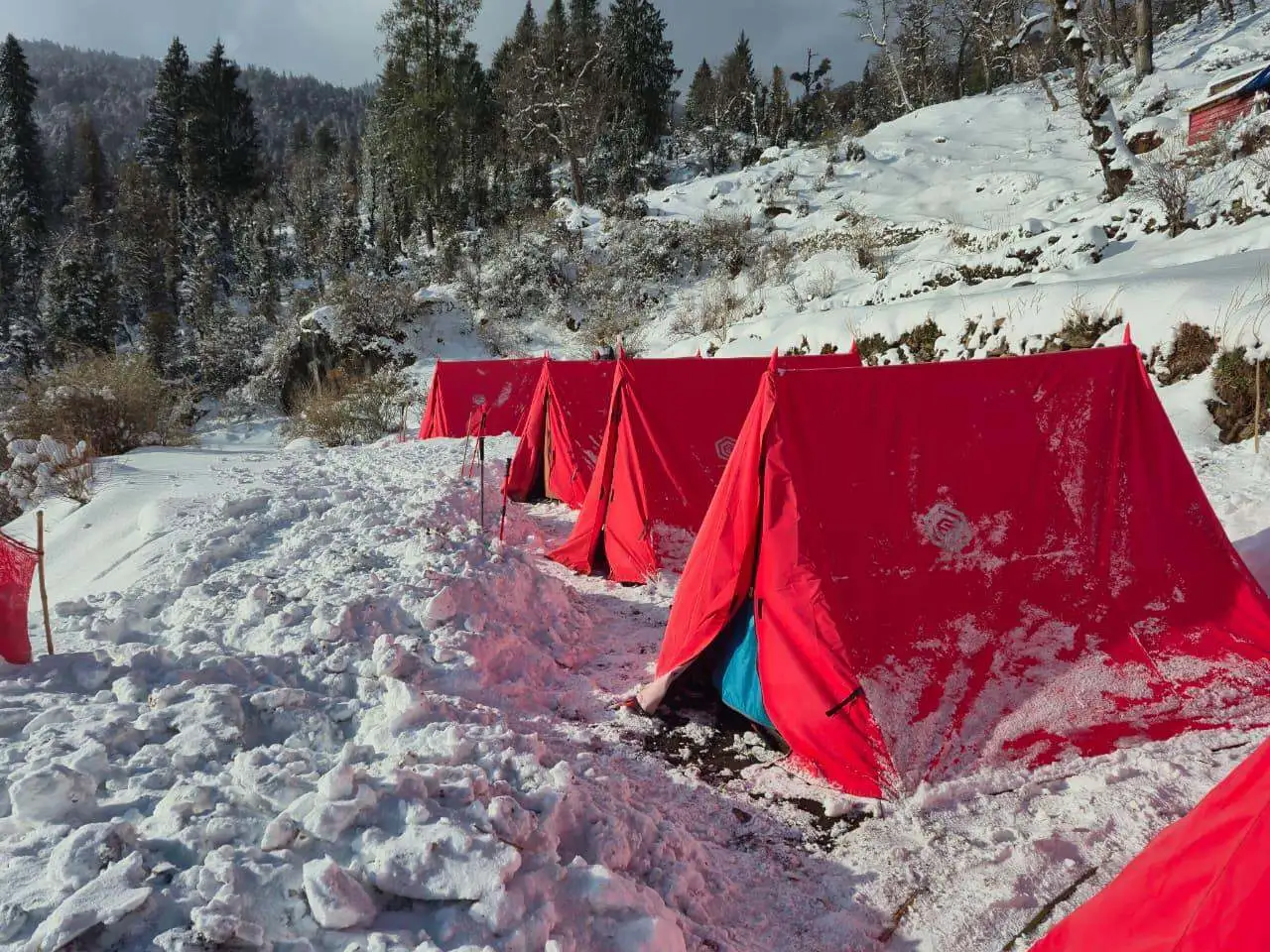
The trail to Kuari Pass currently sees a fraction of the foot traffic of Kedarkantha. Khullara camp has space. The pass ridge, even on a popular December weekend, is unlikely to be congested. The Gorson Bugyal descent is typically quiet.
For trekkers who want the high-altitude winter experience but want to avoid the increasingly busy atmosphere of Kedarkantha — Kauri Pass is the answer.
Reason 6: December and January Bring the Full Winter Wonderland — Without Extreme Difficulty
Here is what distinguishes Kauri Pass from many other Himalayan winter options: the difficulty level stays manageable even as the snow deepens.
Treks like Chadar or Pin Bhaba require cold-weather experience and comfort with genuinely extreme conditions. Kauri Pass, even in December and January with significant snow accumulation, remains in the "easy to moderate" category for reasonably fit trekkers with proper gear.
FactorLate NovemberDecemberJanuarySnow coverageUpper sectionsFull trail from GullingDeep full-trailNight temp (Khullara)-6°C to -10°C-10°C to -14°C-12°C to -18°CNanda Devi visibilityExcellentExcellentVariableTrek crowd levelVery lowLowLow to moderate
The sweet spot is late November to mid-December: deep enough snow for a full winter landscape, cold enough for the visual drama, but not yet at the extremes of January's conditions.
That window is open right now.
Who Is Kauri Pass Right For?
Ideal candidates:
Trekkers who have done 1–2 previous Himalayan treks and want a step up in winter experience
Those who want the Nanda Devi view specifically — no other accessible trek delivers this
Anyone seeking solitude and authenticity rather than a popular, busy trail
Trekkers who want to combine the trek with skiing at Auli
Less suitable for:
Absolute beginners with no mountain trekking experience
Those with severe altitude intolerance (Khullara at 3,500 m is higher than most Kedarkantha camps)
Travellers with very limited time (the drive to Joshimath is long; a 5-day minimum is necessary)
Frequently Asked Questions
Q1. Why is Kauri Pass called underrated compared to Kedarkantha? Kedarkantha gets enormous marketing attention and handles hundreds of trekkers simultaneously at peak season. Kauri Pass has equal or superior views — specifically the Nanda Devi panorama — but attracts far fewer trekkers, offering a quieter and more authentic experience.
Q2. What exactly can you see from the Kuari Pass viewpoint? Nanda Devi (7,816 m), Dronagiri (7,066 m), Kamet (7,756 m), Chaukhamba (7,138 m), Hathi Parbat, Ghori Parbat, and Mana Peak — six peaks above 7,000 m visible simultaneously. This is widely regarded as the finest mountain panorama accessible by trekking in India.
Q3. Is the Auli gondola accessible during the Kauri Pass trek? Yes. The Auli Ropeway operates year-round and is especially busy during the ski season (December–March). If your trek ends or begins at Auli, the gondola provides a scenic descent to Joshimath. Cost is approximately ₹1,000 each way.
Q4. How much solitude can I expect on the Kauri Pass trail in November–December? Significantly more than Kedarkantha. Kauri Pass typically sees a fraction of the foot traffic, particularly in late November. Khullara camp may have only your group's tents. The pass ridge on a mid-week December day often has fewer than a dozen trekkers in total.
Q5. Is Kauri Pass a good choice for a New Year's trek? Yes — the period between Christmas and New Year is a popular window for Kauri Pass. Snow is typically well-established, weather windows are common, and the Auli ski resort nearby adds a festive dimension. Book well in advance as operators fill up for this period.
Global Events and Travels
Admin