Kauri Pass Trek Safety After November 2026 Snowfall Guide
On this page
First snowfall, first questions. November 2026 brought the season's first significant snow to the Kuari Pass trail in Uttarakhand's Chamoli district. And with every snowfall comes the same wave of questions from trekkers with late November and December plans: Is it still safe? What does the trail actually look like? Do I need to postpone?
The Honest Answer Before the Detail
The Kuari Pass route after the November 2026 snowfall is safe for trekkers who arrive properly prepared. It is not safe for those who arrive treating it as a moderate autumn hike with standard gear.
What "properly prepared" means for Kauri Pass in winter:
Waterproof trekking boots
Microspikes for the upper trail (Khullara onwards)
Full 3-layer cold-weather clothing system
Sleeping bag rated to -12°C for Khullara camp
Windproof layers and balaclava for the exposed pass ridge
A registered operator or experienced local guide
Awareness of altitude sickness signs at 3,500–3,815 m
For those who meet that standard: the trail is excellent, the conditions are ideal for a winter experience, and the views of Nanda Devi from the pass are as spectacular as they are all year.
Section-by-Section Trail Report: November 20, 2026
Section 1: Joshimath to Dhak / Auli — Road and Trail Start
Condition: Normal — No Snow at Valley Level
Joshimath sits at approximately 1,890 m (6,200 ft). At this altitude, the November snowfall did not deposit snow. The town functions normally. The road between Joshimath and Dhak village (or the Auli gondola station) is clear.
Risk level: None specific to snowfall
Section 2: Lower Forest Section (Dhak / Auli to Gulling
Condition: Clear Path; Light Frost on Shaded Sections
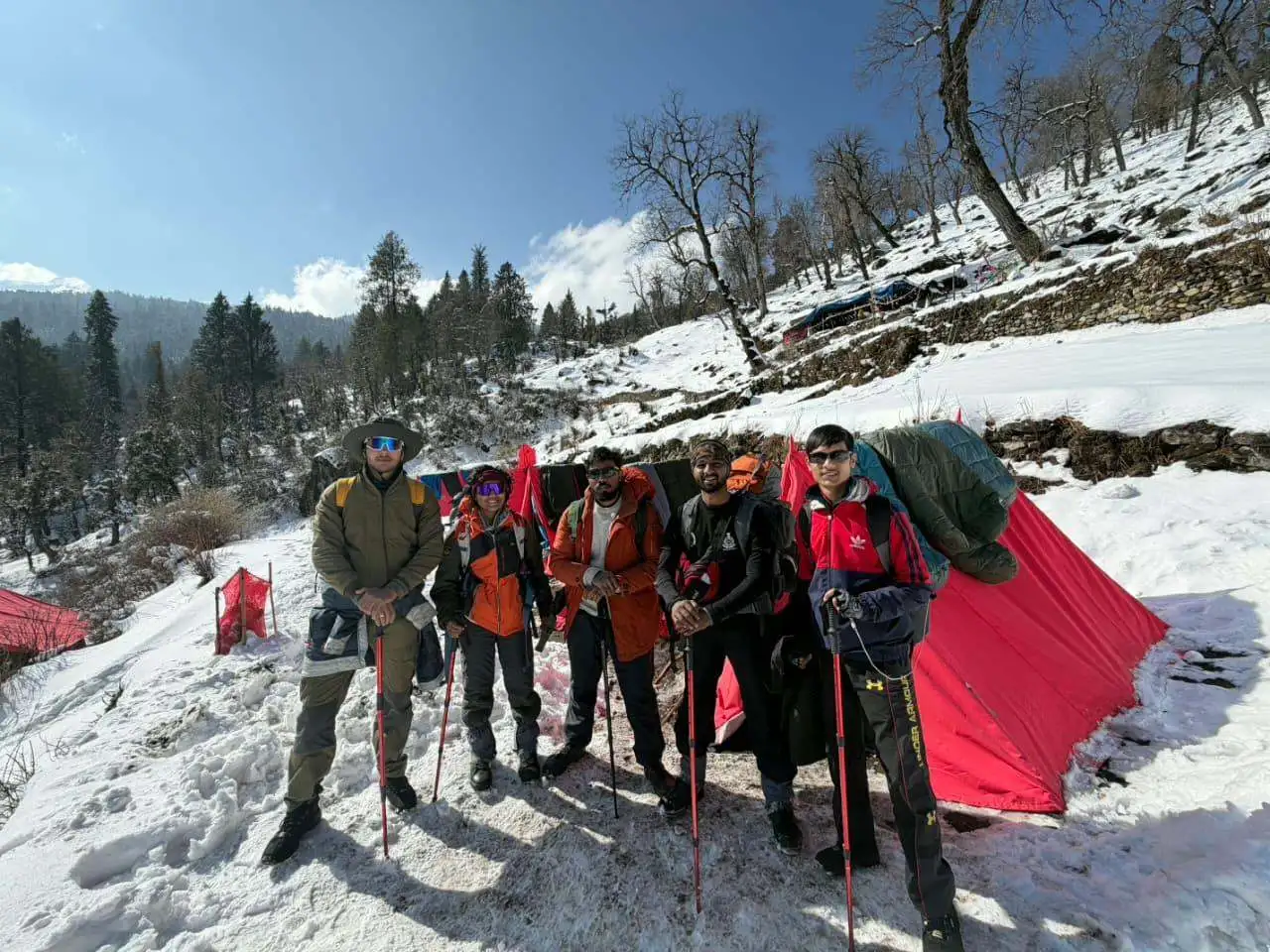
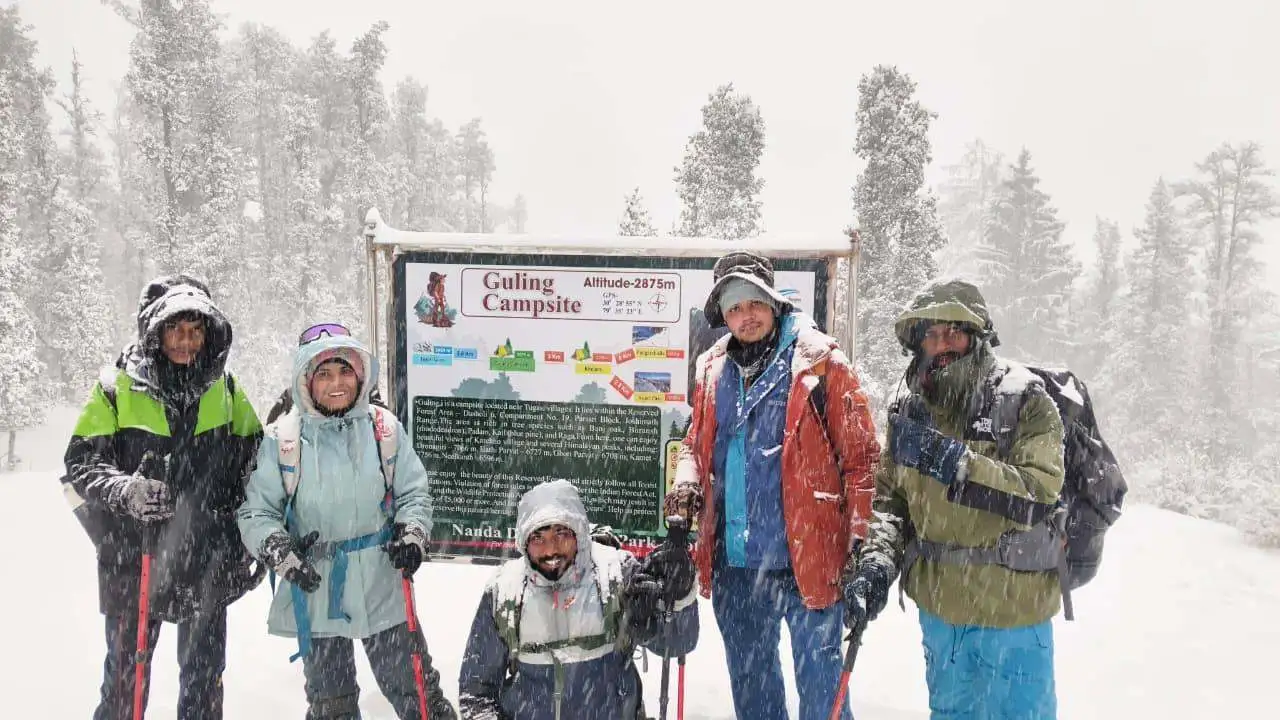
The trail from the starting point climbs through a beautiful mixed forest of oak and rhododendron before reaching the first campsite at Gulling. At this elevation, the November snowfall left light frost on shaded sections but has not deposited consistent snow.
The trail surface is firm and well-defined. Standard waterproof trekking boots with good grip are entirely adequate for this section.
Risk level: Low
Section 3: Gulling to Khullar
Condition: Increasing Snow Cover; Icy Sections in Shaded Forest; Microspikes Recommended
This section marks the transition into proper winter terrain. As the trail climbs above 3,000 m, snow cover on the trail becomes consistent. The November snowfall deposited measurable accumulation here — approximately 2–4 inches in open sections and deeper in wind-sheltered gullies.
The shaded forest sections on this climb develop the characteristic freeze-thaw ice that forms after snowfall — a thin, nearly invisible layer of ice on the trail surface.
Risk level: Moderate | Microspikes strongly recommended from where consistent snow cover begins
Section 4: Khullara Camp
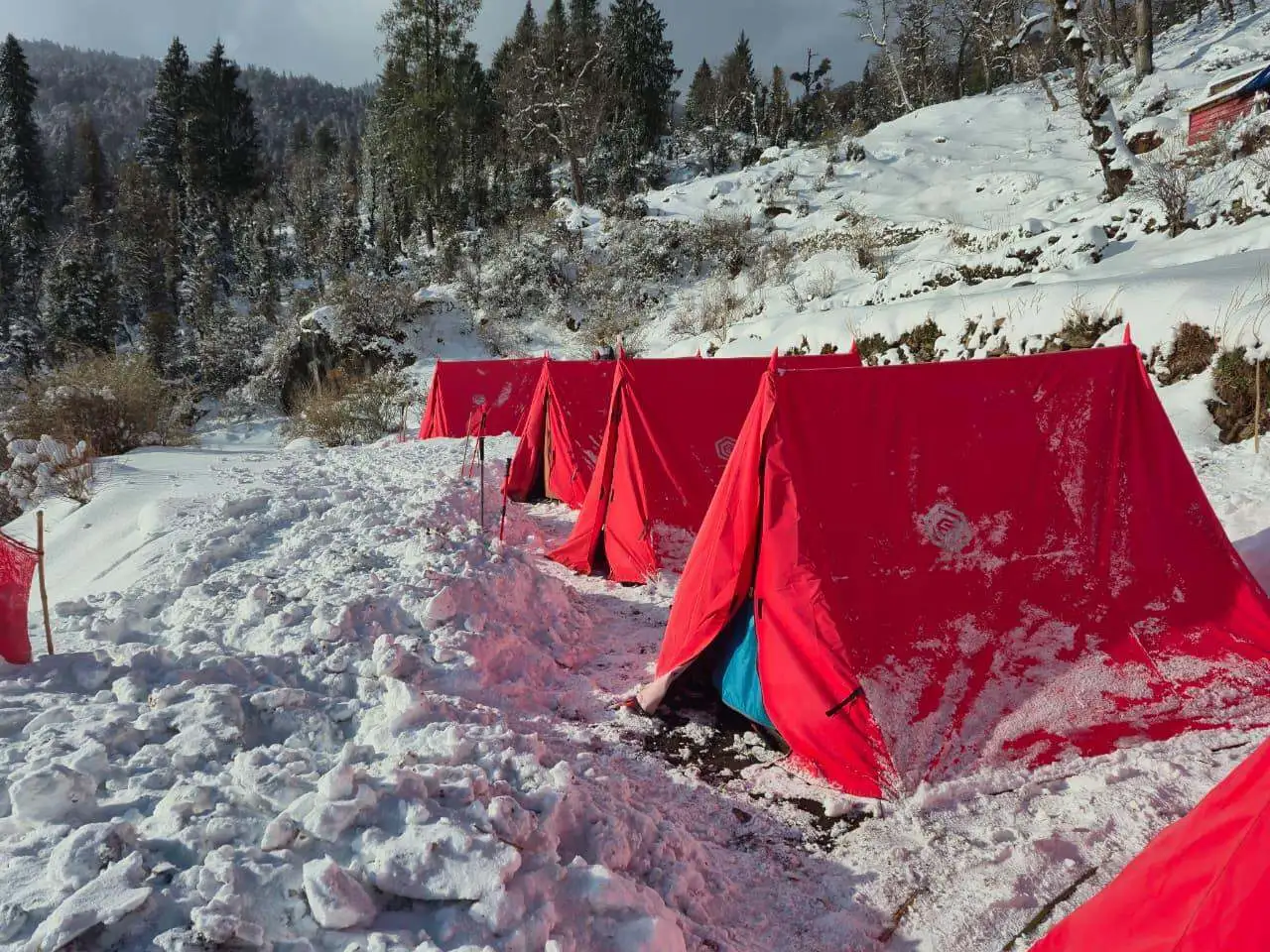
Condition: Full Winter Campsite — Meadow Covered in Snow; Extreme Overnight Cold
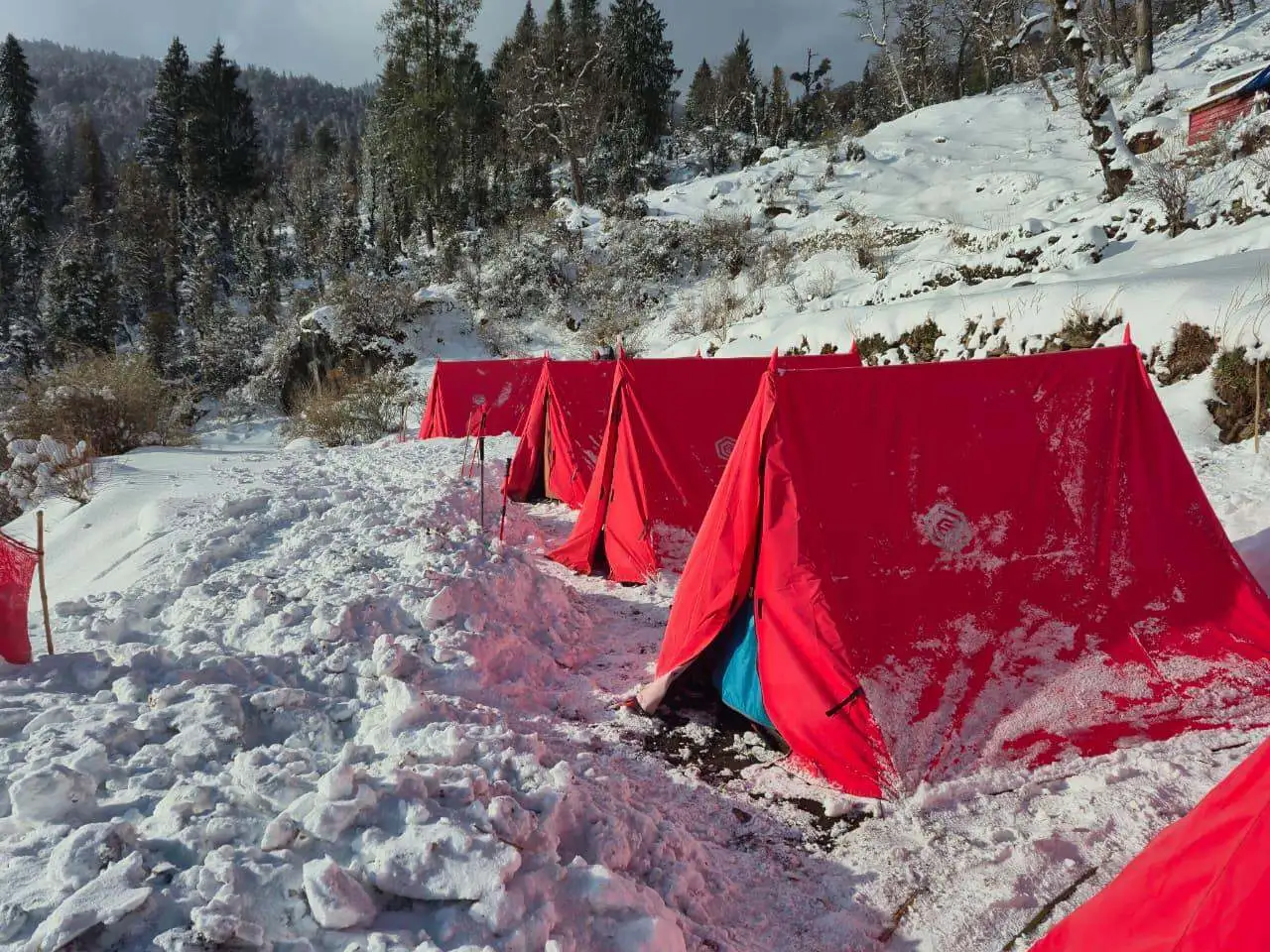
Khullara is one of the most scenically positioned campsites on any Indian trekking route. The November snowfall has covered the meadow in white, and the camp tents are surrounded by snow.
Current overnight temperatures at Khullara: -6°C to -10°C, with potential to drop lower.
What this means for your kit:
Sleeping bag: Minimum -12°C rating. A bag rated to only -5°C will leave you genuinely cold through a Khullara night.
Tent condensation: Will freeze overnight. Keep your boots inside a dry bag inside the tent.
Layers for sleeping: Wear your base layer and mid layer inside your sleeping bag.
CAUTION
Khullara is the highest camp on this route and the coldest sleeping environment. Underestimating the cold here — through an inadequate sleeping bag — is the most common and most preventable risk on the Kauri Pass winter trek.
Section 5: Khullara to Kuari Pass — The Exposed Ridge
Condition: Full Winter Mountain — Consistent Snow Cover, High Wind Chill; Microspikes Essential
This is the defining section of the trek and the highest risk environment on the route.
The trail from Khullara climbs steeply to gain the ridge that leads to Kuari Pass at 3,815 m. After the November snowfall, this ridge section has consistent snow cover of 4–8 inches. The defining characteristic of this section is wind — the ridge is fully exposed with no tree cover.
At -5°C with 25 km/h wind, effective wind chill is approximately -15°C.
Before starting the ridge section, ensure:
All three clothing layers are on
Balaclava is covering your face
Windproof gloves are on (not liner gloves alone)
Microspikes are firmly attached
Trekking poles are in hand
Water bottle is inside your jacket (it will freeze on the outside of your pack)
Risk level: Moderate to High (without proper gear); Moderate (with proper gear and guide)
IMPORTANT
If your guide or trek leader advises turning back before reaching the pass — due to sudden weather deterioration, dangerously high wind, or low visibility — that decision must be respected without argument.
Section 6: Descent via Gorson Bugyal to Auli
Condition: Snow-Covered Meadow; Clear Descent to Auli
The descent via the Gorson Bugyal loop brings you through a beautiful snow-covered meadow — a featureless white expanse with the Auli ski slopes visible on the descent toward the valley. This section is visually spectacular and physically gentler than the pass approach.
Risk level: Low to Moderate
Real Risk Assessment
Risk FactorPreventionHypothermia at KhullaraSleeping bag rated to -12°C + layering systemWind chill on pass ridgeFull windproof gear before starting ridgeBlack ice on forest trailMicrospikes + poles + slow paceAltitude sickness (AMS)Proper 5–6 day itinerary + hydrationGetting lost on trailLocal guide + group trekkingEquipment failure in coldInsulated bottle inside jacket + spare batteries
Who Should Go, Who Should Wait, Who Should Skip
✅ Go in Late November If:
You have or can rent/purchase waterproof boots, microspikes, and proper winter clothing
You are trekking with a registered operator who provides experienced local guides
You have a sleeping bag rated to -12°C
Your fitness level allows 5–6 hours of hiking per day at altitude
Weather forecasts for your planned dates don't show an active Western Disturbance
⏳ Wait 2–3 Days If:
A fresh Western Disturbance is currently active over Chamoli district
Heavy overnight snowfall was reported on the trail in the past 48 hours
You need a few more days to source the right sleeping bag or cold-weather gear
❌ This Trek Is Not Suitable Right Now If:
You don't have or cannot access a sleeping bag rated below -10°C
You have no cold-weather trekking experience and no guide
You cannot commit to at least 5 full trekking days
You are bringing children under approximately 14 or elderly individuals with mobility limitations
The Most Common Mistake: Underestimating the Khullara Night
The Kuari Pass trek is graded "easy to moderate." That grading creates a mental model that leads people to underestimate what sleeping at Khullara in November actually feels like.
Easy to moderate means the trail gradient is accessible. It does not mean the conditions are mild. Sleeping at 3,500 m in -8°C with an inadequate sleeping bag is an experience that will make a 5-hour trail seem straightforward by comparison.
The fix is simple: Bring or rent a sleeping bag rated to -12°C. This is not an upgrade — it is the minimum requirement for Khullara in winter.
❓ Frequently Asked Questions
Q1. Is Kauri Pass trek safe right now after the November 2026 snowfall? Yes — for prepared trekkers. The lower trail is clear. Upper sections from Gulling to Khullara have snow patches with icy sections. The Khullara to Kuari Pass ridge is in full winter condition with consistent snow and significant wind chill. Proper gear and a local guide are essential.
Q2. Which is the most dangerous section of the Kauri Pass route after snowfall? The exposed Khullara to Kuari Pass ridge (3,500 m to 3,815 m) carries the highest risk. It has consistent snow cover, is fully exposed with no tree cover, and experiences strong wind. Full balaclava, windproof layers, and microspikes are mandatory before starting this section.
Q3. Why is the Khullara camp cold so dangerous? Khullara sits at 3,500 m — the highest sleep point on the trek. Overnight temperatures after the November snowfall are -6°C to -10°C, dropping further in December. A sleeping bag rated below -10°C is the minimum. This is the most common preparedness failure among Kauri Pass winter trekkers.
Q4. Should I hire a guide for Kauri Pass in winter? Strongly yes. The snow-covered ridge from Khullara to the pass has limited trail markings. In fresh snowfall or reduced visibility, finding the route without local knowledge is genuinely difficult.
Q5. How do I verify current trail conditions before trekking? Contact your trek operator directly — they run groups daily and have real-time updates. Also ask your Joshimath guesthouse host the evening before your trek day. Never rely on information older than 24 hours in winter conditions.
Global Events and Travels
Admin