Kedarkantha Winter 2026: 7 Reasons to Trek to the Summit
On this page
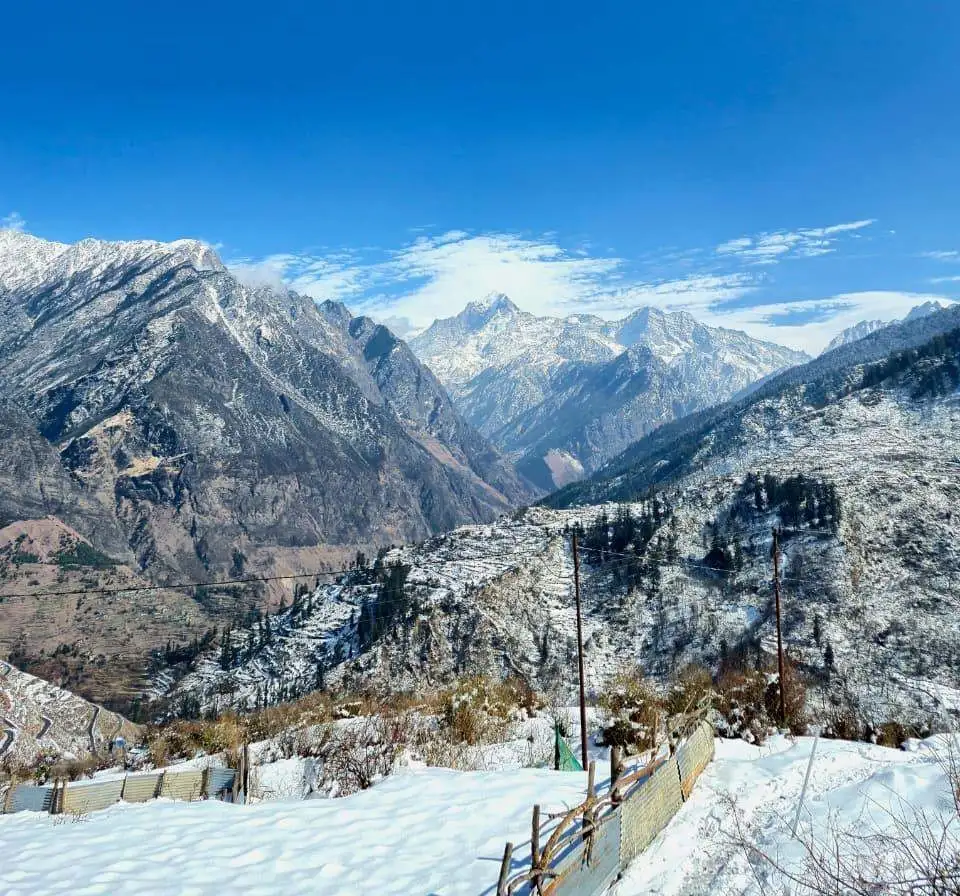
Snow has arrived at Kedarkantha. The first significant snowfall of the 2026 winter season hit the upper reaches of this iconic Uttarakhand trek in mid-November. If you've been on the fence about planning a late November or December trek — here are seven reasons to stop hesitating and start packing.
Before We Begin: What You're Actually Signing Up For
Kedarkantha sits at 12,500 feet in Uttarkashi district, Uttarakhand. The trek from Sankri is approximately 20 km round trip across 5 days, passing through extraordinary forests, climbing past a frozen high-altitude lake, and ending at a summit with views that would make a seasoned mountaineer reach for a camera.
Mid-November's snowfall has reset the trail to its full winter character. Here are seven reasons why that is exactly the right time to go.
Reason 1: The Summit Sunrise Is One of the Most Spectacular in India
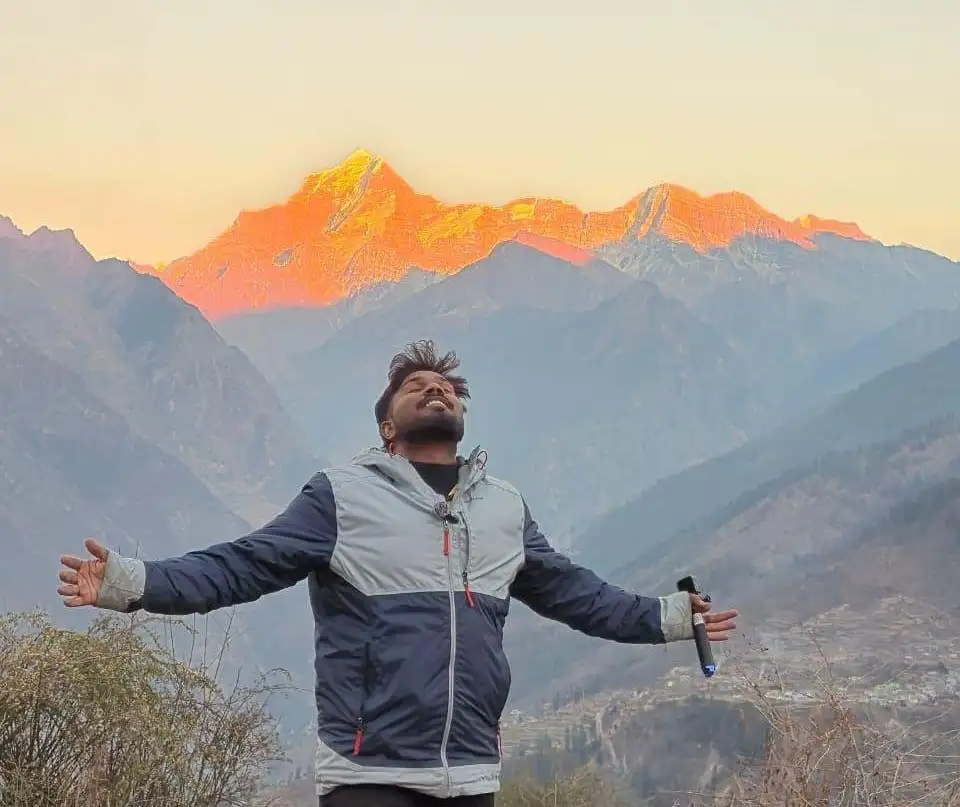
There is a moment on the Kedarkantha summit — typically achieved between 5:30 and 6:30 AM after a pre-dawn start — that most trekkers describe as a turning point.
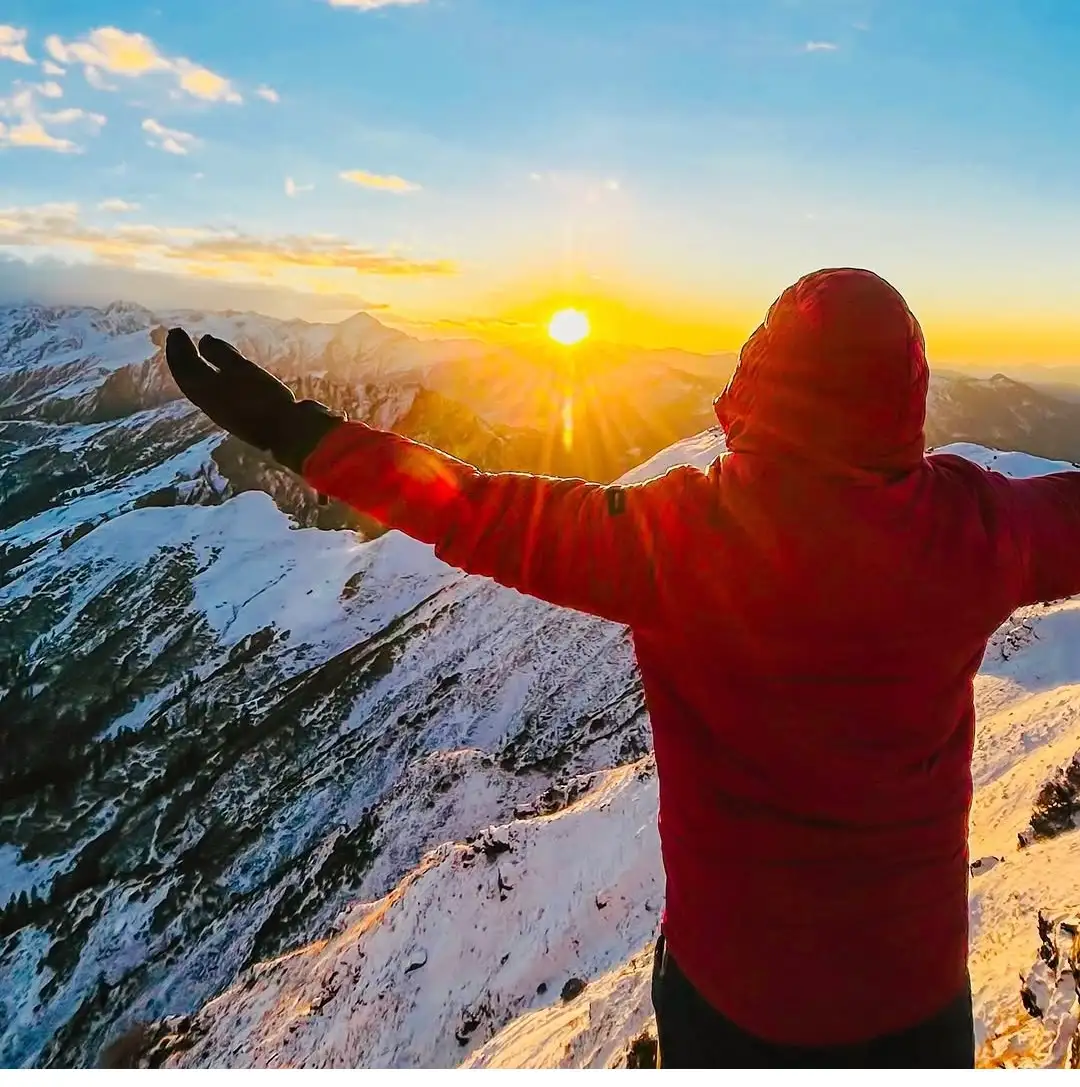
You have climbed for three to four hours through darkness and sub-zero cold. The stars above are extraordinary. Then, almost imperceptibly, the sky to the east begins to lighten. By the time you gain the summit ridge, the first true light is arriving.
The snow on surrounding peaks ignites. Swargarohini's triangular form turns gold. Bandarpunch catches the light. Black Peak glows amber. The valley below is still shadow. You are standing in full sunlight at 12,500 feet.
Peaks visible from the Kedarkantha summit:
Swargarohini (6,252 m), Bandarpunch (6,316 m), Black Peak/Kalanag (6,387 m)
Kedarnath Peak (6,940 m), Chaukhamba group on the eastern horizon
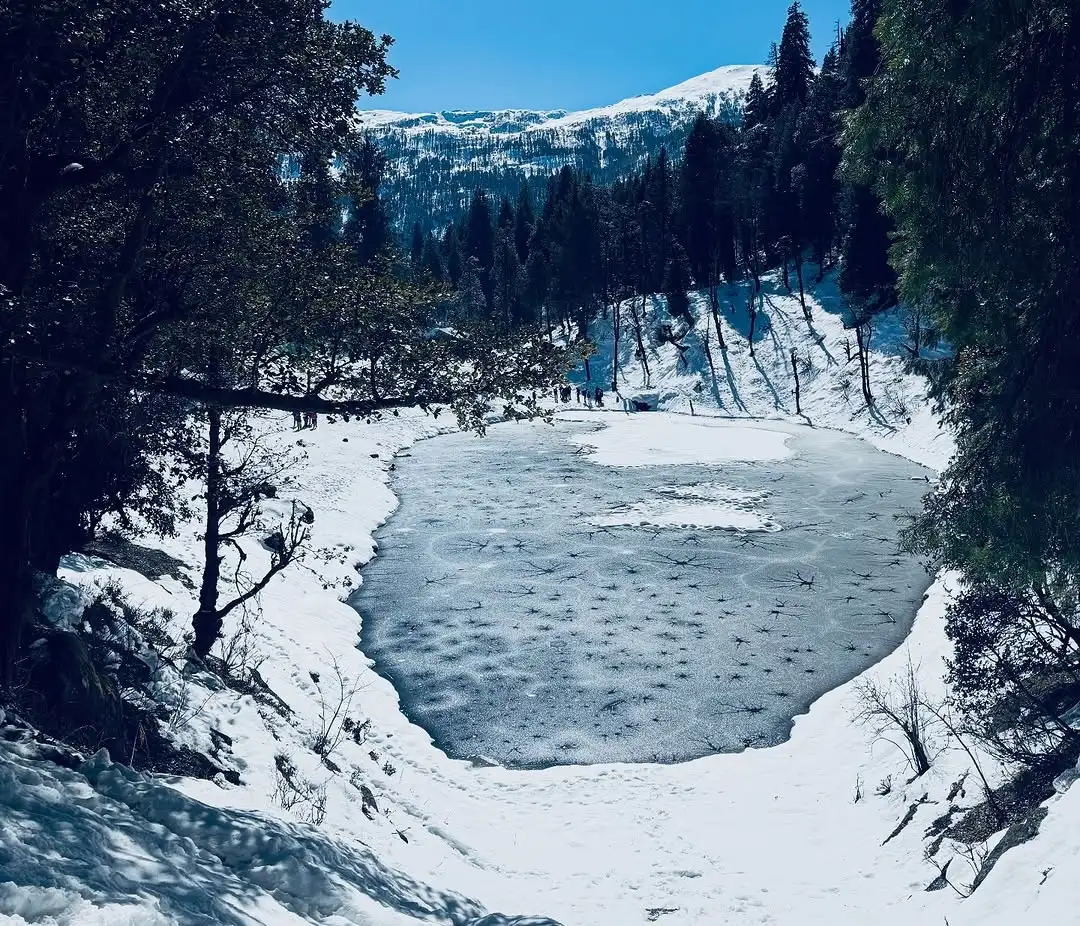
Reason 2: Juda Ka Talab — A Frozen Lake Straight Out of a Fairy Tale
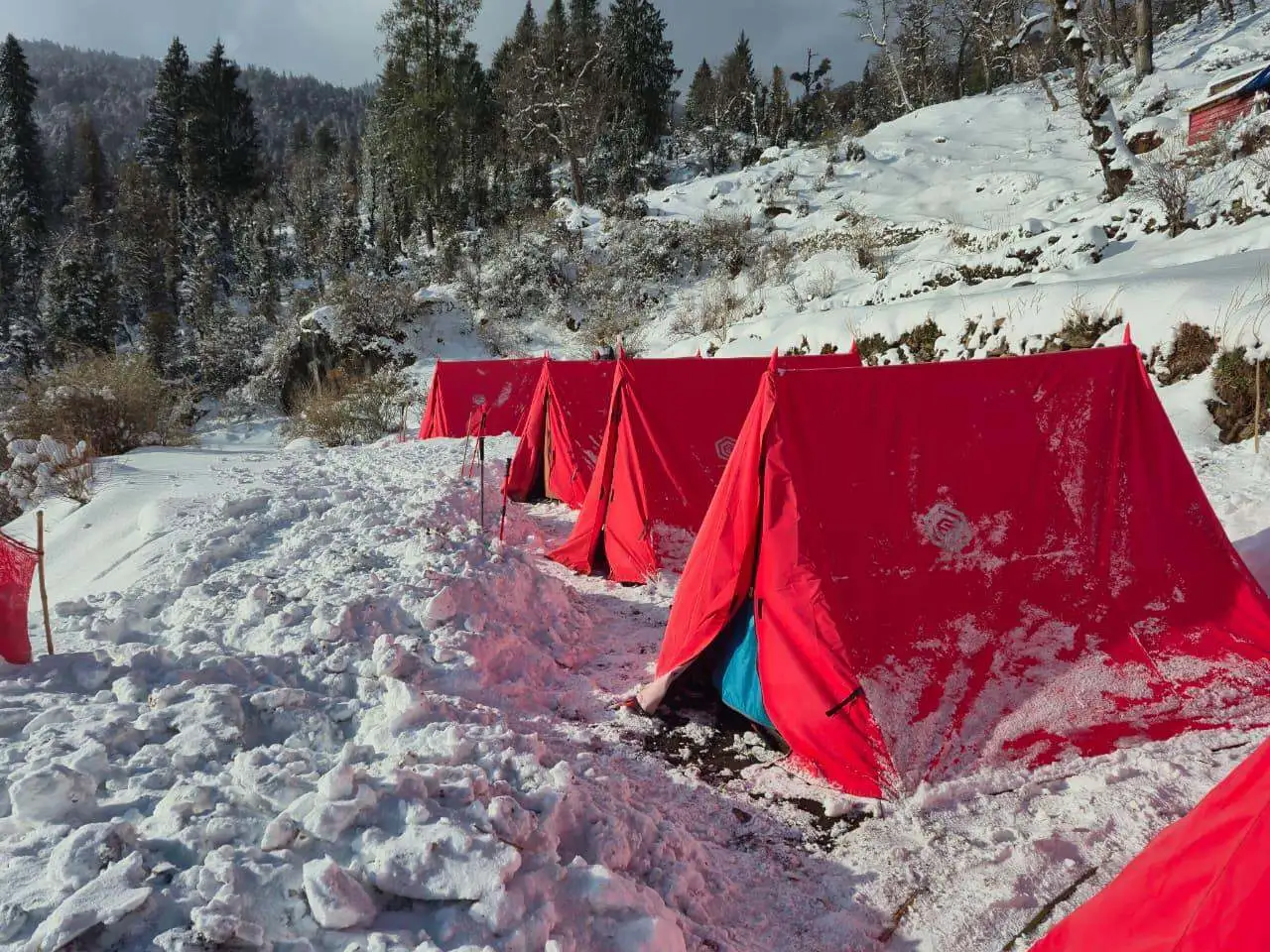
The second campsite on the trail is a small lake set in a forest clearing at 9,100 feet. After the November snowfall, this lake freezes over. The surrounding meadow fills with snow. Pine trees heavy with accumulated snow ring the clearing.
It is, by any measure, one of the most visually extraordinary camping spots available on any trekking route in India. This is your camp for night two of the five-day itinerary. The frozen lake in the beam of your headlamp, before anyone else is awake, is a moment worth savouring.
NOTE
Do not walk on the frozen lake surface. Mountain lake ice is structurally unpredictable. Admire it from the shore.
Reason 3: It Is Genuinely Achievable for First-Time Winter Trekkers
Many of the most dramatic winter experiences in the Indian Himalayas require significant prior high-altitude experience. Kedarkantha does not.
The trail is well-marked. The elevation gain per day is designed for gradual acclimatisation. The maximum altitude of 12,500 feet is high, but not extreme. There are no exposed ridges requiring ropes, no technical ice sections.
What it does require:
Cardiovascular fitness for 5–6 hours of daily walking at moderate pace
Proper gear: microspikes, waterproof boots, 3-layer clothing system
Mental readiness for the 2:00 AM summit push in -10°C to -15°C wind chill
None of these requirements are exceptional. They are achievable with six weeks of preparation and the right equipment.
Reason 4: The Forest Trail Is Unlike Anything You've Seen
Before you reach the snowfields, before the frozen lake, before the summit — there is the forest.
The Kedarkantha trail passes through one of the most beautiful mixed forests in the Garhwal Himalayas. Oak trees with massive, gnarled trunks. Rhododendron groves bare and architectural in winter. Pine trees with the characteristic smell that opens your lungs and slows your mind.
After the November snowfall, sections of this forest carry snow on every branch and in the hollows of every trunk. The footfalls of other trekkers ahead of you leave tracks in the trail snow. The light filters through it at angles that change every few minutes as you climb.
The forest section — Sankri to Juda Ka Talab, particularly in the upper oak zone — is worth the entire trip on its own.
Reason 5: November–December Offers the Best Views of the Season
Weather in the Garhwal Himalayas follows a pattern. Monsoon ends in September. October brings clearing skies and the clearest air of the year. November continues this clarity — post-monsoon, pre-heavy winter.
The views from Kedarkantha's summit and upper ridge in December are as sharp and unobstructed as they will be all year. The atmosphere is dry, the air is clean, and the peaks stand in full relief against a blue sky so saturated it seems almost artificial.
This is the photographic window that professional mountain photographers specifically target. And 2026's first snowfall means that the December window will combine maximum snow coverage with maximum visual clarity.
Reason 6: The December Snowpack Delivers the Full Experience
Here is the distinction that matters for planning.
Late October Kedarkantha is beautiful — golden autumn forests, crisp air. But it doesn't feel like a winter snow trek yet. Mid-November to January Kedarkantha, after the snowfall has arrived and accumulated, is something categorically different. The camps are surrounded by snow. The summit push is through proper winter conditions. The frozen lake is properly frozen.
This is the full experience that photographs of Kedarkantha promise.
MonthSnow CoverSummit ViewsCrowd LevelLate NovemberLight to moderateExcellentVery lowDecemberModerate to heavyExcellentLow to moderateJanuaryDeepGoodHigh
For the best balance of experience quality and manageable crowd levels — late November to mid-December is the sweet spot.
Reason 7: The Silence of a Winter Himalayan Night
At Juda Ka Talab camp, or at Kedarkantha base camp — after dinner has been cleared away, after conversation has wound down — there is a silence in a winter Himalayan camp that is genuinely unlike any other quiet you will ever encounter.
The stars are extraordinary at 9,000–11,000 feet in a clear December sky. The Milky Way is not a smudge — it is a structure, dimensional and vivid. The mountains around you are invisible in the dark, but you feel their presence in the absolute stillness of the air.
No wind. No animal sounds. No traffic. No city hum. Just stars, snow, and silence.
This is what you are actually going to Kedarkantha for. The summit is the punctuation mark at the end of a sentence that is entirely this.
Frequently Asked Questions
Q1. Why is the Kedarkantha sunrise considered the best in India? The 360-degree panorama from 12,500 ft includes Swargarohini, Bandarpunch, Black Peak, and Kedarnath Peak — all lit simultaneously by first light after a pre-dawn climb through snow. The combination of altitude, snow-covered peaks, and the sky transition makes it uniquely spectacular.
Q2. Is Juda Ka Talab lake actually frozen in winter? Yes — from mid-November onwards, the lake begins freezing at the edges, and by December it is fully iced over. The surrounding meadow fills with snow, making it one of the most beautiful campsites in Indian trekking. Do not walk on the ice surface.
Q3. When is the ideal window for the best Kedarkantha snow experience? Late November to mid-December is the sweet spot — fresh snow from the first snowfall, crystal-clear winter air, and significantly fewer crowds than the January peak season. The November 2026 snowfall has opened this window right now.
Q4. How dark and cold is the 2 AM summit push really? Completely dark and genuinely cold — typically -10°C to -15°C with wind chill on the exposed summit ridge. Proper layering, a balaclava, and waterproof gloves are non-negotiable. The experience of watching the sky transform from black to gold at the summit makes every cold step worth it.
Q5. Can I summit Kedarkantha without prior trekking experience? Yes, with proper preparation. Physical fitness (ability to walk 5–6 hours at moderate pace), appropriate winter gear, and trekking with a registered operator are the three requirements. No prior mountaineering experience is necessary.
Global Events and Travels
Admin